EDIT MODE
Click any highlighted text to edit it
LAUNCH OFFER - SAVE LE 400 ON EVERY GYMPIN
Home Shop Blog Our Story Contact Cart (0)
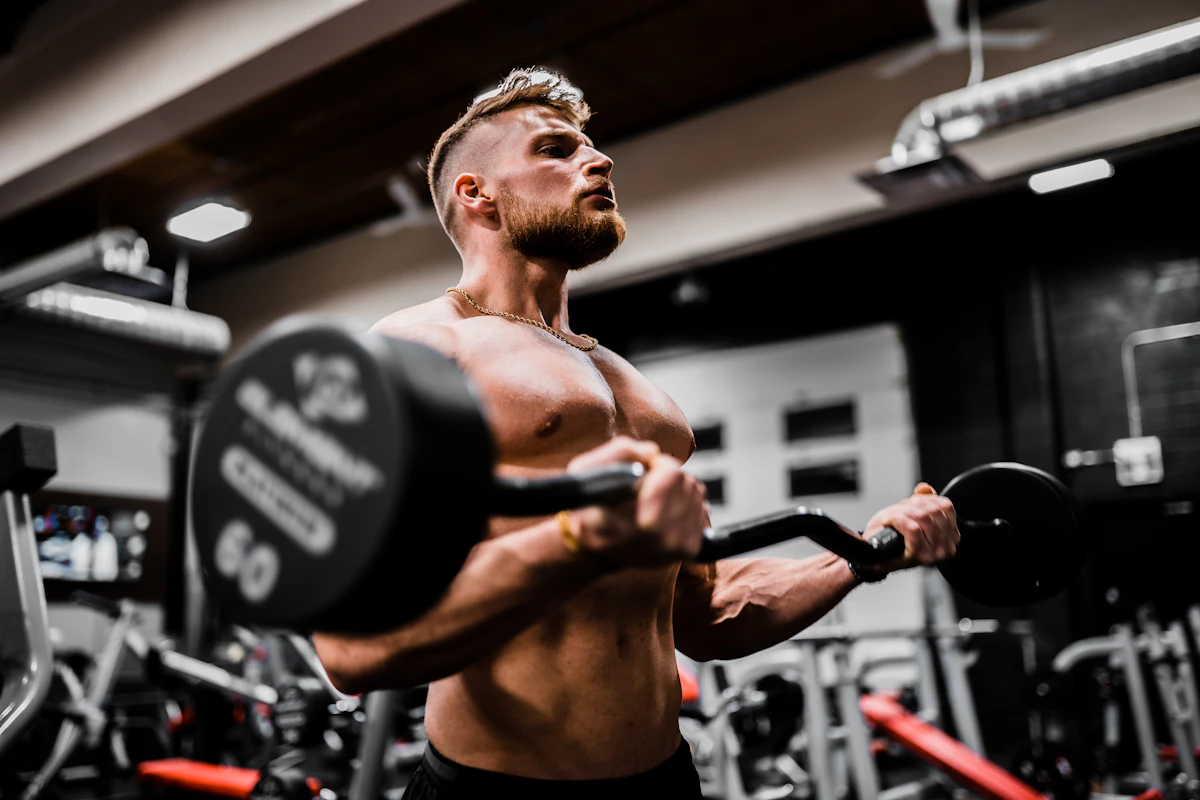
Gym environment
SAVE LE 400 - LIMITED TIME

BREAK THE
LIMIT

Maxed out the stack? Or stuck between two weight plates that are too far apart? Add the exact weight you need to any cable machine in seconds.

Ships Across Egypt
7-Day Guarantee
Premium Steel
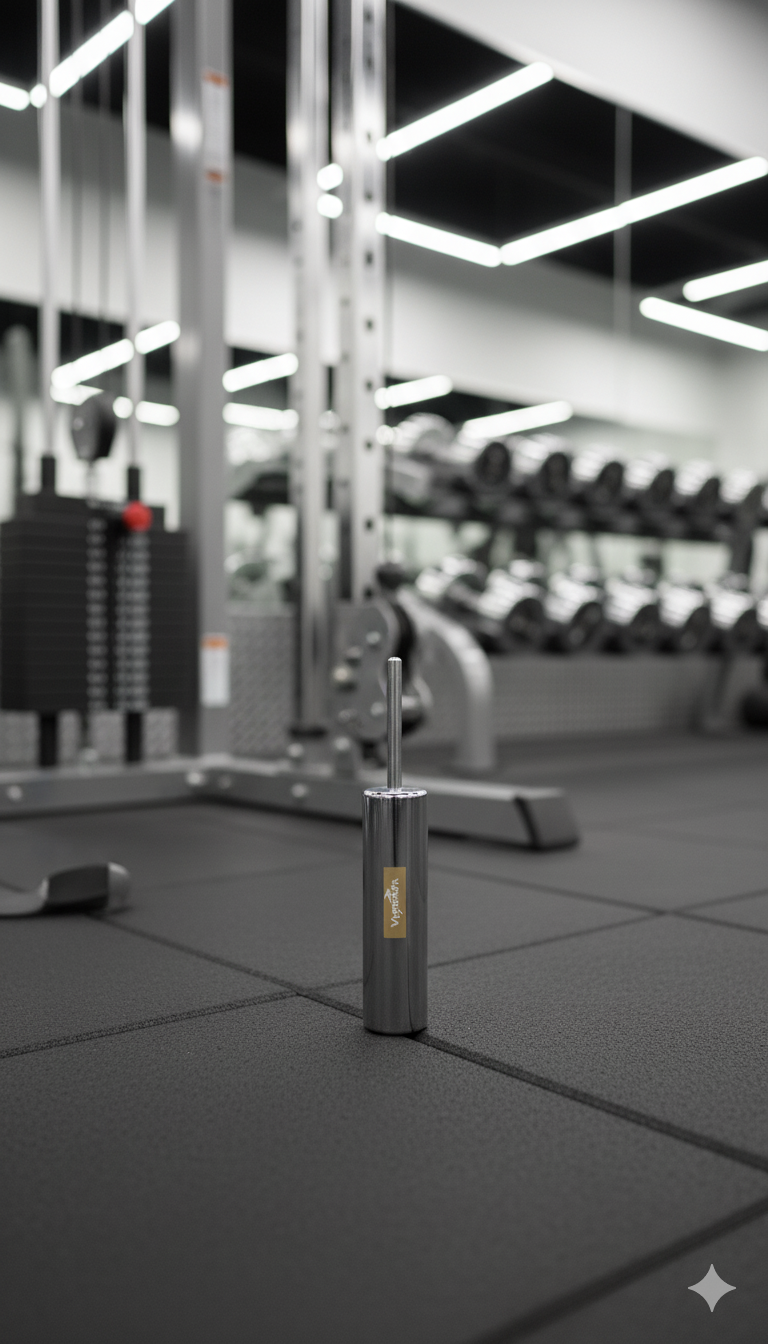
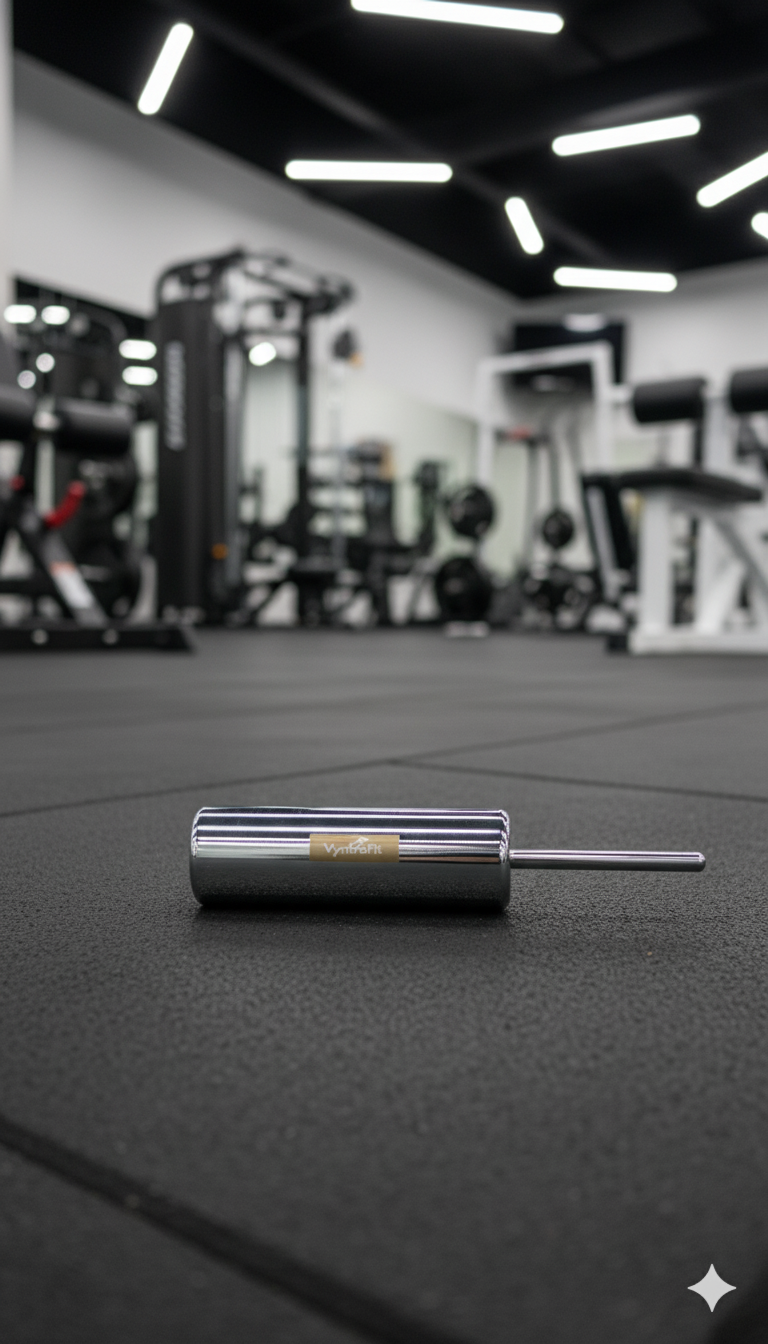
VyntraFit GymPin in gym

Your Machine.
More Weight.
No Limits.

Maxed out the stack, or stuck between two plates that are too far apart? The VyntraFit GymPin lets you add the exact weight you need for proper progressive overload. Slide it in, stack your plates, and keep progressing.

High-grade steel, won't bend or rust
2 sizes available: 8mm and 10mm
Tested in real Egyptian gyms
LE 1,599 LE 1,199 Save LE 400
View Product

Three Simple Steps

No tools needed. No modifications. Just stronger training in seconds.

1

Measure Your Machine

Check the hole diameter on your cable machine's weight stack. It's either 8mm or 10mm.

2

Choose Your Size

Select the matching VyntraFit GymPin variant. Not sure? We'll help you figure it out.

3

Add Extra Weight

Slide the pin into the weight stack, load extra plates on top, and train with the exact weight you need.

Why VyntraFit

High-Grade Steel

Built from premium steel that handles heavy loads without bending, chipping, or rusting.

2.5KG Solid Build

Weighing in at 2.5 kilograms of solid steel, this isn't a lightweight accessory. It's built to last.

Precision Engineered

Machined to fit weight stacks perfectly. Smooth finish, tight tolerances, zero wobble.

2 Size Options

Available in 8mm and 10mm to match your gym machine's weight stack hole diameter.

Gym Tested

Tested and trusted by lifters across Egyptian gyms. Real athletes, real results, real feedback.

Ships Across Egypt

We deliver to every governorate in Egypt. 1-2 days processing, 2-5 days to your door.

Cable Training, Elevated

Train At Exactly
The Weight You Need.

No more stuck between plates. No more maxed stacks. Just the right weight, every set.

Don't Just Take
Our Word For It

Hear what the founder of EvolveWay, Egypt's leading fitness supplements and apparel brand, has to say about the VyntraFit GymPin.

Founder, EvolveWay

All of Egypt

We ship nationwide

Premium Steel

High-grade, rust-resistant

7-Day Guarantee

Damaged? We replace it

Real Gym Tested

By actual lifters in Egypt

Frequently Asked
Questions

A GymPin is a weight stack accessory that solves two common cable machine problems: hitting the maximum weight on the stack, and dealing with weight jumps that are too big between plates. It replaces the standard selection pin and lets you load extra plates on top, so you can add the exact weight you need for proper progressive overload.
The VyntraFit GymPin comes in two sizes: 8mm and 10mm. The size refers to the diameter of the pin shaft, which needs to match the hole diameter in your cable machine's weight stack. Most machines in Egyptian gyms use one of these two standard sizes.
Measure the hole in your machine's weight stack where the selection pin goes. You can use a ruler or caliper. If you're unsure, take a photo and send it to us on WhatsApp and we'll help you identify the right size. Most common gym machines in Egypt use either 8mm or 10mm.
The VyntraFit GymPin is made from high-grade steel and precision engineered for a secure fit. However, it should only be used on well-maintained, high-quality cable machines. Always inspect the machine before use. Do not use on damaged, old, or poorly maintained equipment. VyntraFit is not responsible for injuries resulting from use on incompatible or faulty machines.
We process orders within 1-2 business days. Delivery takes 2-5 business days depending on your location in Egypt. You'll be contacted via phone or message before delivery. We ship to all governorates across Egypt.
We accept returns only for items that arrive damaged. You have 7 days after receiving your order to contact us with photos of the damage. The product must be unused and in its original packaging. We'll offer either a full replacement or a refund, your choice. Contact us via WhatsApp or Instagram.
The VyntraFit GymPin is compatible with most standard cable machines that use weight plates with standard hole diameters (8mm or 10mm). It works with the vast majority of machines found in Egyptian gyms. However, always check your machine's hole size before ordering and ensure the machine is in good working condition.

Break Your
Limit Today

LE 1,599 LE 1,199 Save LE 400

Free shipping across Egypt. 7-day damage guarantee.

VyntraFit - Local GymPin

Break The Stack Limit.

Slide it in. Stack extra plates. Train at the exact weight you need - on any cable machine.

LE 1,599 LE 1,199 Save LE 400
Low stock - order soon
Bypass the weight limit instantly
Replace the standard pin, load any extra plates on top. No modifications. No tools. Just more weight.
Precision-machined for your machine
Available in 8mm and 10mm to match every standard cable machine found in Egyptian gyms.
2.5KG solid steel - built to last
High-grade steel, chrome-finished. Zero flex, zero wobble. A one-time buy that outlasts gym memberships.
Select Your Size
Size guide →
Quantity
1
7-Day Damage Protection
Fast Delivery Across Egypt
Tested In Real Gyms
Important Safety Notice

Designed for use on high-quality, well-maintained cable machines only. Always inspect your machine before use. Do not use on damaged, old, or poorly maintained equipment. VyntraFit assumes no responsibility for injuries or equipment damage resulting from incompatible use. By purchasing, you accept full responsibility for safe usage. See our Terms of Service.

The VyntraFit GymPin solves two problems every serious cable machine lifter knows: hitting the stack max with nowhere to go, and the gap between plates being too large for real progressive overload. One is too light, the next is too heavy - and you're stuck.

Replace the standard selection pin with the GymPin, load the exact extra weight you need on top, and train at precisely the right resistance. It's 2.5 kilograms of high-grade steel, chrome-finished, precision-machined in two sizes - 8mm and 10mm - to fit the most common cable machines in Egyptian gyms.

MaterialHigh-Grade Steel
FinishPolished Chrome
Weight2,500g (2.5 KG)
Available Sizes8mm / 10mm
CompatibilityStandard cable machine weight stacks
Country of OriginEgypt

Step 1 - Measure: Check the hole diameter on your weight stack. It's either 8mm or 10mm.

Step 2 - Insert: Remove the standard pin. Slide the GymPin through the weight stack at your chosen weight level.

Step 3 - Load: Stack your extra plates onto the GymPin's loading shaft on top of the stack.

Step 4 - Verify & Train: Make sure everything is seated securely. Do one light test rep. Then go.

High-Grade Steel · Made For Egyptian Gyms · 2.5KG Solid Build · Tested In Real Gyms · Precision Engineered · 8mm / 10mm · Chrome Finish · Zero Flex. Zero Wobble. · High-Grade Steel · Made For Egyptian Gyms · 2.5KG Solid Build · Tested In Real Gyms · Precision Engineered · 8mm / 10mm · Chrome Finish · Zero Flex. Zero Wobble. ·
2.5
KG Solid Steel
2
Sizes - 8/10mm
0
Modifications Needed
Stack Not a Barrier
The Problem

Your cable machine is capping your progress.

  • You've maxed the weight stack - and there's nowhere to go heavier
  • The gap between plates is too big for proper progressive overload
  • One plate is too light, the next is too heavy - you're stuck in the middle
  • The machine was built for the average lifter. You're past that.
The Fix

One pin. Train at any weight you want.

  • Replace the standard selection pin with the GymPin in seconds
  • Stack any extra plates on top - 2.5KG, 5KG, 10KG, whatever you need
  • Bridge the gap between plates for perfect progressive overload
  • Works on any cable machine. No tools. No modifications. Just results.

Four Steps. Unlimited Weight.

01
Measure
Find the hole diameter on your cable machine's weight stack - 8mm or 10mm. A quick ruler check is all it takes.
02
Insert
Pull out the standard pin. Slide the GymPin through the weight stack at the level you want to start from.
03
Load
Slide your extra weight plates onto the GymPin's loading shaft. Add as much as your training demands.
04
Train
Confirm everything is seated, run one light test rep, then lift without limits. Progressive overload, finally unlocked.

Hear It From the Founder of EvolveWay

The founder of EvolveWay, Egypt's leading fitness supplements and apparel brand, shares his experience with the VyntraFit GymPin.

Founder, EvolveWay

Questions about the GymPin

The VyntraFit GymPin fits most standard cable machines with 8mm or 10mm weight stack hole diameters. If you're unsure about your machine, send us a photo on WhatsApp - we'll confirm the right size before you order.
The GymPin is designed to handle significant loads - most users add between 10–40kg of extra plates. That said, the actual limit depends on your machine. Always ensure your cable machine can handle the total combined weight before training at maximum load.
Yes - when used correctly on a well-maintained machine. Always inspect your cable machine before use, start with a light test rep after loading, and never exceed the machine's rated capacity. The GymPin itself is built from solid high-grade steel and will not flex, bend, or fail under normal use.
Contact us within 7 days of delivery with photos of the damage. We'll send a replacement or issue a full refund - your choice. Reach us on WhatsApp or Instagram and we'll sort it out quickly.
We process orders within 1–2 business days. Delivery across Egypt typically takes 2–5 business days depending on your governorate. You'll receive order confirmation on WhatsApp once it ships.
VyntraFit GymPin LE 1,199

Built From The
Gym Floor Up

How a group of friends turned a gym frustration into one of Egypt's local gympin brands.

Cable machines in Egyptian gym

Stuck At The Stack Limit

It started in a local Egyptian gym. A group of friends who trained together regularly hit the same wall: cable machines with fixed weight limits. Once you maxed out the stack, that was it. And even before maxing out, the weight jumps between plates were too big. One plate was too light, the next too heavy, making proper progressive overload nearly impossible. Serious lifters were being held back by equipment limitations, and there wasn't a local solution.

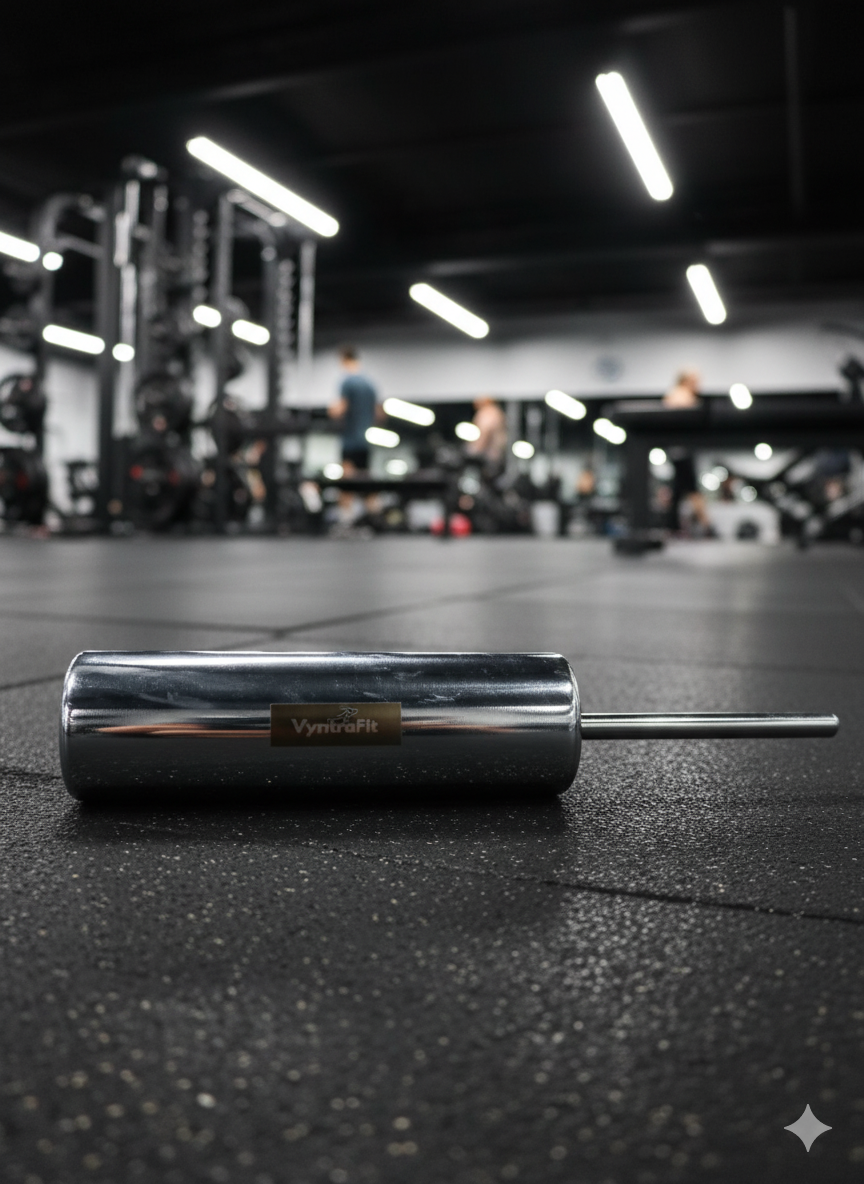
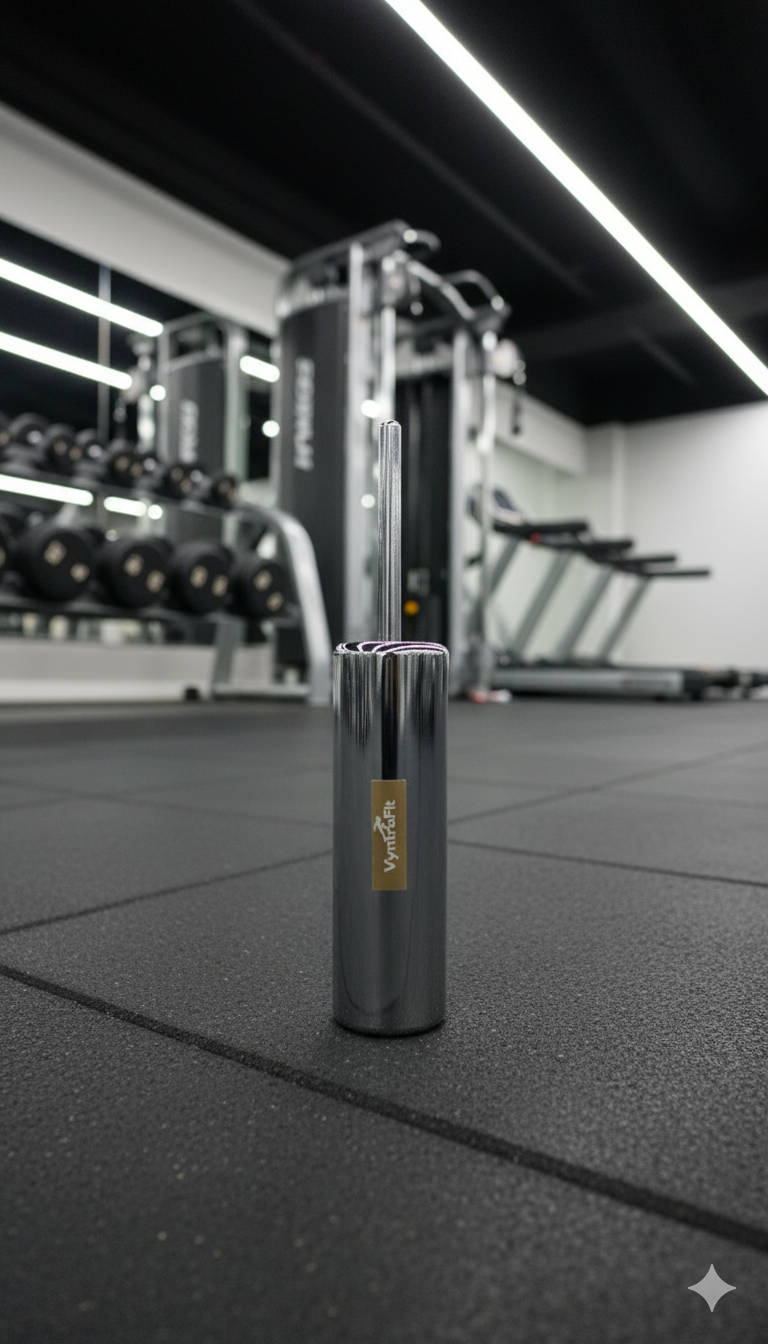
VyntraFit GymPin on gym floor

A Simple Steel Solution

The idea was straightforward: a precision-engineered steel pin that replaces the standard selection pin and lets you load extra plates on top. No modifications to the machine. No complicated setup. Just slide it in, stack your weight, and go. The concept existed abroad, but there was nothing built specifically for Egyptian gyms and their machines.

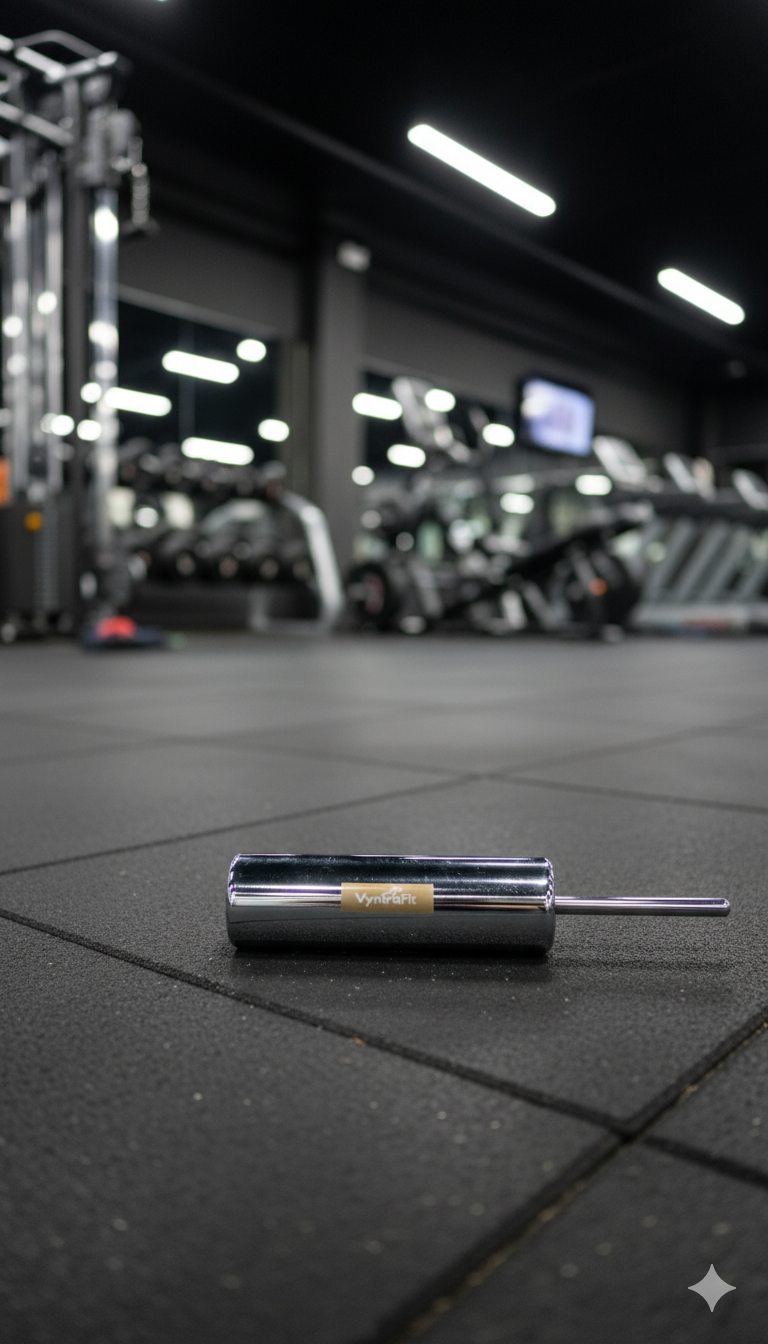
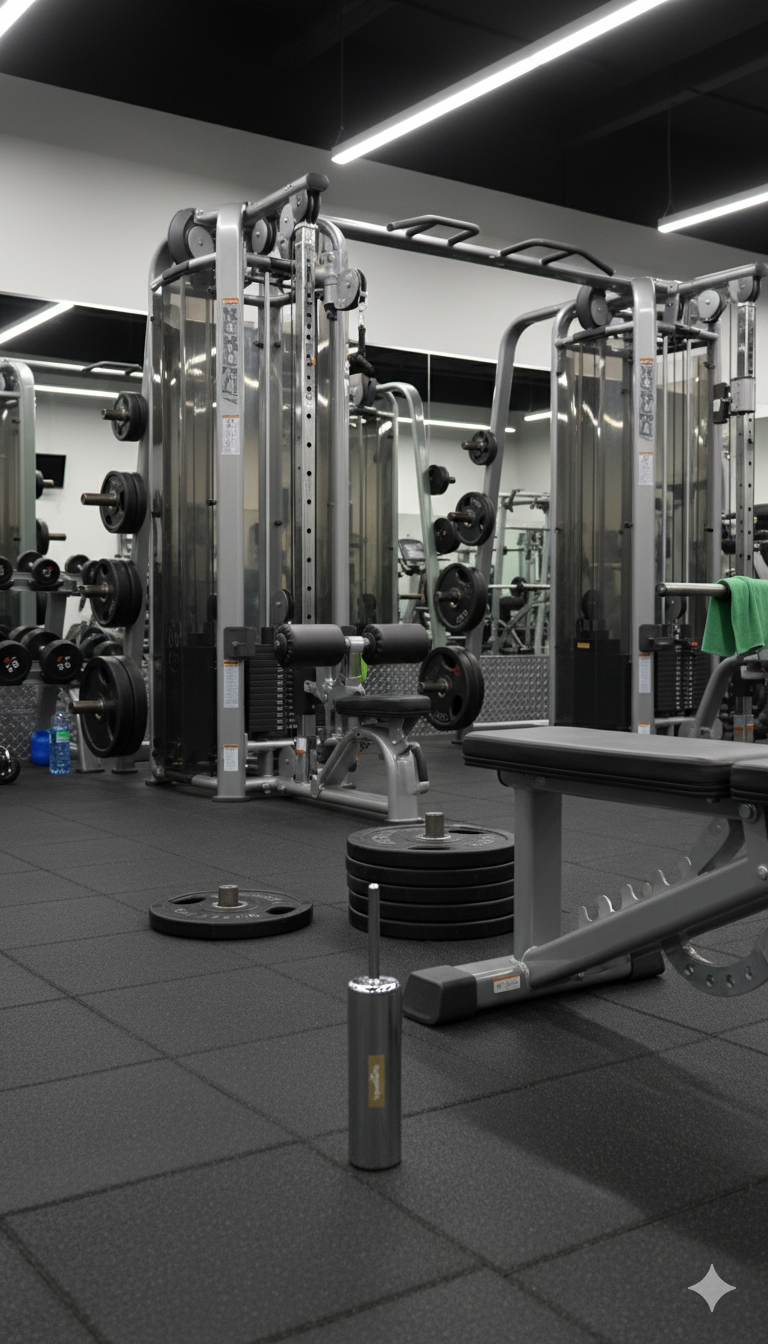
VyntraFit GymPin being tested in gym

Engineered For Egyptian Gyms

We sourced high-grade steel, worked with local engineers, and went through multiple prototypes. Every iteration was tested in real gyms across Egypt, checking the fit, the durability, the finish. We refined the sizing to match the two most common weight stack hole diameters found in Egyptian gym equipment: 8mm and 10mm. The result was the VyntraFit GymPin.

VyntraFit GymPin in Egyptian gym

One of Egypt's Local GymPin Makers

Today, VyntraFit is one of the local gympin brands in Egypt, helping lifters across the country push past cable machine limits. We're proud of what we've built: a simple, strong product that does exactly what it's supposed to do. No gimmicks. Just quality steel and a genuine understanding of what Egyptian lifters need.

Contact Us

Have a question about sizing, shipping, or anything else? We're here to help.

8mm or 10mm -
Which Size Do You Need?

Different cable machines use different pin hole diameters. Find your machine brand below to get the right fit. A GymPin that's too loose is unsafe - the right size locks in and holds firm.

8mm
Most Egyptian Gyms
10mm
Premium Commercial
8mm
Impulse
Very common in Egyptian gyms. All commercial cable stack models.
FBT
Thai brand. Found in many mid-range Egyptian gyms and clubs.
Realleader
Chinese brand. Widely distributed across Egyptian commercial gyms.
Body Solid
Most cable stack models. Common in Egyptian semi-commercial gyms.
DLS Sport
Distributed in Egypt. Cable stack machines.
Master Fitness
Local Egyptian brand. Standard cable models.
VG Sport
Egyptian-distributed brand. Most stack machines.
Olympia
Egyptian market brand. Cable and functional trainers.
Life Fitness
Insignia and Signature Series. Very common in premium Egyptian gyms and hotel fitness centers.
Matrix
Magnum and Aura Series. Widely found in commercial Egyptian gyms and hotel clubs.
Technogym
Selection and Pure Strength Series. Found in luxury hotels and premium clubs in Egypt.
Precor
Discovery Series. Found in high-end Egyptian gym chains and hotel gyms.
Freemotion
Genesis and EPIC Series. Found in some premium Egyptian gyms and clubs.
SportsArt
Commercial cable series. Found in Egyptian commercial gyms and fitness centers.
Inspire Fitness
FTX and SCS Series. Found in Egyptian mid-to-high-end gyms.
Johnson Fitness
Commercial cable machines distributed in Egypt.
Reebok Fitness
Commercial line found in branded Egyptian fitness centers.
Amila
Budget commercial series distributed in Egypt.
Rockit
Found in Egyptian gyms. Cable stack equipment.
BH Fitness
Verify before ordering - some models use 8mm, others 10mm.
Life Fitness (older)
Pre-2010 models may vary. Measure to confirm.
Matrix (older)
Some older models use different diameters. Measure to confirm.
10mm
Hammer Strength
MTS and HD Elite cable series. Found in serious Egyptian gyms and high-end training clubs.
Cybex
VR3 and Eagle Series. Found in high-end Egyptian fitness centers and hotel gyms.
Hoist
ROC-IT and commercial cable series. Found in premium Egyptian gym chains.
Star Trac
Commercial Strength Series. Found in some Egyptian hotel gyms and upscale clubs.
Nautilus
Commercial series found in some Egyptian gyms and fitness centers.
Atlantis
Strength Series. Found in premium Egyptian fitness clubs.
Paramount
Commercial Strength line. Some Egyptian commercial gym chains.
Panatta
Italian brand. Found in some premium Egyptian fitness facilities.
Icarian
Heavy commercial cable series. Some high-end Egyptian gyms.
BodyMax
Commercial cable stack series found in some Egyptian gyms.
Bodycraft
Most models are 8mm, but some commercial series may be 10mm. Measure to confirm.
Hoist (older)
Some older commercial models may differ. Measure before ordering.

Measure Your Machine in 3 Steps

If your brand isn't listed, or you want to be 100% sure before ordering, measure the hole yourself. It takes less than a minute.

Step 01
Find the Pin Hole
Locate the weight stack on your cable machine. Find the vertical hole that the selection pin passes through - it runs through all the weight plates.
Step 02
Measure the Diameter
Use a ruler or digital caliper to measure the inner diameter of the hole. The measurement is in millimeters. Note it down.
Step 03
Match to Your Size
If your measurement is 8mm - order the 8mm. If it's 10mm - order the 10mm. Still unsure? Send us a photo on WhatsApp and we'll confirm before you order.

We'll Tell You the Right Size

Send us a photo of your machine's weight stack on WhatsApp and we'll confirm your correct size before you place an order. No guessing, no returns.

Important: This guide is based on the most common configurations for each brand. Machine variants, production years, and regional models can differ. We strongly recommend physically measuring your weight stack hole diameter before ordering, especially for machines made before 2015 or machines sourced from international imports. If you have any doubt, send us a WhatsApp message with a photo of your machine and we'll confirm your size for free.

Shipping Policy

Shipping Coverage

VyntraFit delivers to all governorates across Egypt. No matter where you are in the country, we'll get your GymPin to you.

Processing Time

Orders are processed within 1-2 business days after payment confirmation. During high-demand periods, processing may take slightly longer.

Delivery Time

Once processed, delivery typically takes 2-5 business days depending on your location. Cairo and major cities usually receive orders on the faster end, while more remote areas may take the full 5 days.

Delivery Process

You will be contacted via phone call or message before your delivery arrives. Please ensure the contact number you provide at checkout is active and reachable.

Shipping Cost

Shipping fees are calculated at checkout based on your delivery location. We regularly offer free shipping promotions, check the current offer on our homepage.

Issues With Your Delivery

If you experience any issues with your delivery (delays, incorrect address, or anything else), please contact us immediately via WhatsApp or Instagram and we'll resolve it as quickly as possible.

Refund Policy

Return Eligibility

We accept returns only for items that arrive damaged during shipping. We do not accept returns for change of mind, incorrect size selection, or damage that occurs after delivery.

Timeframe

You have 7 days from the date you receive your order to contact us about a damaged item. Requests made after this window will not be eligible for a return or refund.

Condition Requirements

  • The product must be unused and in its original condition
  • The product must be in its original packaging
  • You must provide clear photos showing the damage
  • Proof of purchase (order number or confirmation) is required

How to Request a Return

Contact us via WhatsApp or Instagram with your order number, a description of the damage, and photos. Our team will review your request and respond within 1-2 business days.

Resolution Options

If your return is approved, you may choose between:

  • A full replacement shipped to you at no extra cost
  • A full refund to your original payment method

Non-Eligible Returns

The following are not eligible for return or refund:

  • Products damaged through use or misuse
  • Products returned without prior authorization
  • Products damaged after delivery (drops, scratches, etc.)
  • Size-related issues (please measure your machine before ordering)

Privacy Policy

Last updated: May 2026

Information We Collect

When you place an order or contact us through our website, we collect the following information:

  • Name and contact details (phone number, email address)
  • Shipping address and governorate
  • Order details and transaction history
  • Messages and communications you send us

How We Use Your Information

We use your personal information to:

  • Process and fulfill your orders
  • Contact you about your order status and delivery
  • Respond to your inquiries and support requests
  • Improve our products and services

Data Storage

Your order data is stored locally in your browser for order processing. We do not share your personal information with third parties except as necessary for order fulfillment (shipping partners) and as required by law.

Cookies

Our website uses browser local storage to maintain your cart and order information. This data stays on your device and is not transmitted to external servers.

Your Rights

You have the right to request access to, correction of, or deletion of your personal information at any time. Contact us via WhatsApp or email to make such a request.

Contact

For privacy-related inquiries, contact us at support@vyntrafit.com.

Terms of Service

Last updated: May 2026

By accessing or using the VyntraFit website and purchasing our products, you agree to the following terms and conditions.

Product Information

We strive to display our products as accurately as possible. However, actual product appearance may vary slightly from images shown on our website. Pricing is in Egyptian Pounds (EGP) and is subject to change without notice.

Liability Disclaimer & Assumption of Risk

IMPORTANT - PLEASE READ CAREFULLY:

The VyntraFit GymPin is a weight stack accessory designed for use on properly maintained, high-quality cable machines only. By purchasing and using this product, you acknowledge and agree to the following:

  • User Responsibility: You are solely responsible for determining whether the VyntraFit GymPin is compatible with your specific gym machine. You must verify the hole diameter and confirm the machine is in safe working condition before use.
  • Machine Requirements: Only use the GymPin on well-maintained, structurally sound, commercial-grade cable machines. Do NOT use on machines that are old, damaged, poorly maintained, rusted, or of unknown origin or quality.
  • Assumption of Risk: You understand that adding extra weight to a cable machine beyond its designed capacity carries inherent risks. You voluntarily assume all risks associated with the use of this product.
  • No Liability: VyntraFit, its founders, employees, and affiliates shall NOT be held liable for any injuries, bodily harm, equipment damage, property damage, or any other losses resulting from the use or misuse of the VyntraFit GymPin. This includes but is not limited to: injuries from equipment failure, injuries from dropped weights, damage to gym machines, and any indirect or consequential damages.
  • Gym Machine Breakage: If any gym machine breaks, malfunctions, or is damaged as a result of using the VyntraFit GymPin, the full responsibility lies with the user, not VyntraFit. Users must ensure their machine is rated for the total weight being used.
  • Third-Party Liability: If you use the GymPin in a commercial gym setting, you are responsible for obtaining any necessary permissions from the gym owner or operator. VyntraFit is not responsible for any disputes between you and third parties.

Order and Payment

By placing an order, you agree to provide accurate and complete contact and shipping information. Orders are subject to availability. We reserve the right to cancel orders at our discretion.

Shipping and Delivery

Delivery times are estimates and not guaranteed. Please refer to our Shipping Policy for full details. VyntraFit is not responsible for delays caused by shipping carriers or circumstances beyond our control.

Returns and Refunds

Returns are accepted only for items damaged during shipping, subject to the conditions outlined in our Refund Policy. All sales are otherwise final.

Intellectual Property

All content on this website, including text, images, logos, and design, is the property of VyntraFit and may not be reproduced, distributed, or used without written permission.

Limitation of Warranty

The VyntraFit GymPin is provided "as is" without warranties of any kind, express or implied. We do not warrant that the product will be suitable for any particular machine or purpose beyond its general intended use.

Changes to Terms

We reserve the right to update these terms at any time. Changes take effect immediately upon posting to this page. Your continued use of our website and products constitutes acceptance of the revised terms.

Contact

For questions about these terms, contact us at support@vyntrafit.com.

VyntraFit Admin Console › Dashboard
Checking sync…
Overview
Dashboard
Store
Orders
Product
Inventory
Refunds
Coupons
Site
Content
Media
Preview
Inbox
Messages 0
Settings

Dashboard

Performance overview

to

Performance

Conversion Funnel

Top Pages

by views

Order Status

Top Governorates

by revenue

Devices

by views

Recent Orders

Product

Manage your product details, pricing, and images

Product Details

Sale Active
Show Low Stock Badge

Product Images

Upload images directly from your device. Drag to reorder. First image is the main gallery image.

Supports JPG, PNG, WebP. Images are stored in the browser and synced to Supabase if configured.

Orders

All orders

OrderDateCustomerLocationItemsTotalStatus

Inventory

Stock levels and low stock alerts

Stock Levels

Refunds

Track and resolve refund requests

Refund IDOrderDateReasonStatusAction

Coupons

Manage discount codes

CodeTypeValueMin OrderUsesExpiryRefStatus

Messages

Customer inquiries from the contact form

Content

Edit any text on the website visually, or use the fields below

Visual Editor

Click directly on any text in the website to edit it. Blue outlines show what's editable.

Or edit fields directly

Preview

See how your website looks on a phone. Navigate between pages to check each one

This is a live preview at 375px width (iPhone)

Settings

Store configuration, notifications, sync, and security

Announcement Bar

Show Announcement Bar

Contact Information

Order Notifications

Get a push notification on your phone the instant an order is placed. Free, no signup. Setup (2 minutes):
1. Install the ntfy app on your phone (App Store / Play Store)
2. Pick a unique, hard-to-guess topic name (e.g. vyntrafit-orders-x7q9k) and paste it below
3. In the ntfy app, tap “Subscribe to topic” and enter the exact same name

Customer Order Confirmations

A branded confirmation email is sent automatically from admin@vyntrafit.com to every customer the moment they place an order. You also receive a BCC copy at the same address. Powered by Brevo's transactional API. Setup (one-time):
1. Add BREVO_API_KEY in Cloudflare Pages › Settings › Environment Variables (get it from Brevo › SMTP & API › API Keys)
2. In Brevo › Senders, verify admin@vyntrafit.com (you'll get a confirmation email at that address — click the link)
3. Redeploy in Cloudflare Pages to pick up the env var

Sender: admin@vyntrafit.com

Data & Security

Orders, messages, products and settings are stored securely on the server and reach this panel only after you log in. The public site and customers never have direct database access, and prices/discounts are validated server-side at checkout. Sync across all devices is automatic — nothing to configure here.

Admin Password

Media

Upload replacement images for any photo on the website. Changes sync across devices via Supabase

Your Cart

Your cart is empty

Checkout

Cash on Delivery (COD)
Pay when your order arrives at your door
SubtotalLE 0
ShippingLE 70
PaymentCash on Delivery
TotalLE 0

Order Placed!

Thank you for your order. We'll contact you shortly to confirm delivery details.

Order

New Coupon

%
Percentage
e.g. 20% off total
LE
Fixed Amount
e.g. LE 100 off
Active — coupon is usable

Admin Access

Enter the admin password to continue

Incorrect password

Knowledge Base

The VyntraFit Blog

Training guides, machine deep-dives, and everything you need to know about pushing past the weight stack limit in Egyptian gyms.

Man performing cable machine exercise
Training Science
Why Your Cable Machine's Weight Stack Is Holding You Back (And How to Fix It)
You've put in years of work and your strength has gone through the roof — but your cable machine's weight stack maxed out months ago. Here's what's happening and exactly how to fix it.
10 min read
Read Article
Hands gripping cable machine handle
Buying Guide
8mm vs 10mm GymPin — Which Size Fits Your Cable Machine?
Getting the wrong size means the pin won't fit and won't work. This complete guide tells you exactly which diameter your gym's machines use so you buy right the first time.
7 min read
Read Article
Athlete performing lat pulldown on cable machine
Training Science
The Science of Progressive Overload on Cable Machines (And Why You're Hitting a Wall)
Progressive overload is the single most important principle in building muscle. But there's a dirty secret about cable machines that nobody in Egyptian gyms is talking about.
9 min read
Read Article
Modern gym with exercise machines
Exercise Guide
10 Cable Machine Exercises You're Limiting by Not Having Enough Weight
From lat pulldowns to cable rows to face pulls — these 10 staple movements are massively compromised the second your stack runs out. Here's the full breakdown.
11 min read
Read Article
Dark gym interior with exercise machines
Egyptian Gyms
Egyptian Gym Machines and the Weight Stack Problem No One Talks About
Egyptian gyms are full of high-quality commercial machines. But advanced lifters keep running into the same wall. Here's the problem — and the local solution that finally exists.
8 min read
Read Article
Black and white gym equipment row
Safety & FAQ
Is a GymPin Safe? Every Question Answered Before You Buy
Before you add anything to a cable machine's weight stack, you want to know it's safe. We answer every safety question honestly — including the ones most brands avoid.
8 min read
Read Article
Athlete training in gym
Training Science
How to Break Through a Training Plateau on Cable Machines
Plateaus kill progress. Most lifters try changing exercises or adding volume — but miss the most obvious fix sitting right in front of them. Here's a complete plateau-breaking system for cable training.
10 min read
Read Article
Lifter resting at gym
Brand Story
VyntraFit: Three Egyptians, One Vision — Become the Leading GymPin Brand in Egypt
Three Egyptians spotted a clear market gap, saw the opportunity, and built the solution from the ground up. This is the story of how VyntraFit started and where it's going.
6 min read
Read Article
Back training on cable machine
Exercise Guide
How to Build a Bigger Back Using Only Cable Machines
The complete cable back training guide — lat pulldowns, rows, straight-arm pulldowns, and exactly how to keep adding weight when your stack runs out.
12 min read
Read Article
Gym weights and training equipment
Training Science
Cable Machines vs Free Weights: Which Builds More Muscle?
The eternal gym debate settled with science. Cables and barbells each have specific advantages — and the answer is more nuanced than most fitness content admits.
9 min read
Read Article
Athlete performing lat pulldown
Exercise Guide
The Complete Lat Pulldown Guide: Grip, Form, Variations & Progressive Overload
The lat pulldown is the most important cable exercise for back development. This is the definitive guide — every grip option, technique cue, variation, and loading strategy.
11 min read
Read Article
Gym accessories and training tools
Buying Guide
Best Cable Machine Accessories for Serious Lifters (Egypt 2025)
The right accessories transform cable machine training. Every attachment and loading tool ranked by actual training impact — with availability in Egyptian gyms in mind.
7 min read
Read Article
Cable machine weight stack
Buying Guide
How to Add Weight to a Cable Machine: The Safe, Engineered Solution
Your cable stack has run out. You've seen people balance loose plates on top — there's a right way and a dangerous way to add load. Here's the engineered answer Egyptian gyms need.
6 min read
Read Article
Back to Blog
Training Science 10 min read
Athlete on lat pulldown cable machine

Why Your Cable Machine's Weight Stack Is Holding You Back (And How to Fix It)

You've trained hard for years. Your squat has climbed. Your bench has climbed. Your deadlift is respectable. But your cable machine? You hit the top of the stack months ago — and now every single cable session is just maintenance, not growth. This article explains exactly why that happens and what serious lifters in Egypt are doing about it.

VyntraFit GymPin — LE 1,199

High-grade steel. 2KG solid. Fits Egyptian gym machines. Ships Egypt-wide.

Shop Now

The Problem Nobody Admits at the Gym

Walk into any serious gym in Cairo, Alexandria, or anywhere in Egypt and you'll see it. The advanced guys on the cable stations — lat pulldowns, seated rows, cable flyes — working with every plate on the stack, sometimes piling towels or random objects on top just to add a little more resistance. It looks improvised because it is improvised. And it's dangerous.

Standard commercial cable machine weight stacks are designed for the general gym population. Most stacks top out somewhere between 80kg and 110kg. For beginners and intermediate lifters, that's plenty. But for anyone who's been training consistently for two or more years and built real strength, that ceiling gets hit fast — especially on big compound cable movements like lat pulldowns and seated rows where your back, lats, and rear delts can handle far more load.

The result? You're stuck doing 12, 15, even 20 reps because you physically can't add more weight. Your muscles adapt to a load range, stop receiving a meaningful growth stimulus, and progress stalls completely. You haven't gotten weaker — the machine just can't go heavier.

Why This Matters More Than You Think

Progressive overload is the single most important training principle for building muscle and strength. It means consistently increasing the demands you place on your muscles over time — through more weight, more reps, better technique, or shorter rest. Without it, your body has no reason to adapt, grow, or get stronger.

When you cap out a weight stack, you've eliminated the most direct and measurable form of progressive overload available to you: adding more weight. You can try to squeeze out more reps, but there's a limit to how much hypertrophy extra reps in a high rep range actually drive — especially when you're an experienced lifter. The research is clear: for advanced trainees, heavier loads in moderate rep ranges produce significantly better strength and size adaptations than exclusively high-rep work.

"Every week you train at a maxed-out stack without adding load, you are doing maintenance work — not growth work."

This is the silent killer of cable machine progress in Egyptian gyms. Lifters feel like they're training hard. They're sweating, they're going through the motions, they're "working out." But they're not progressing. The stimulus is the same as last week, last month, maybe even last year.
Row of kettlebells on metal rack in gym

What a GymPin Actually Is

A gympin is a solid steel pin that slots into the weight stack of a cable machine. It adds to — rather than replacing — the pin already in the stack, effectively increasing the total load. The VyntraFit GymPin weighs exactly 2 kilograms of solid high-grade steel and is precision-machined to fit directly into the standard hole diameter on the weight stack.

The mechanism is simple: your cable machine's weight selector uses a pin to "select" a plate level. Every plate above that pin rides up when you pull. The gympin adds an extra 2kg on top of that existing load — meaning if you were pulling 100kg before, you now pull 102kg. Stack two gympins and you're at 104kg. It's clean, it's secure, and it's the exact same principle the machine already uses.

How It Works — Step by Step

  • Insert your regular weight selector pin as normal to choose your base load
  • Insert the VyntraFit GymPin into the same hole or the next available hole above your pin
  • The GymPin adds 2KG of solid steel to every rep
  • Use two GymPins together to add 4KG total
  • Progressive overload restored — keep growing

Why 2KG Is the Perfect Increment

Two kilograms might sound small. It's not. When you're working near your maximum on a cable exercise, 2kg is a genuinely meaningful jump. Elite powerlifters compete in increments of 500g on the platform. Strength athletes know that microloading — adding small, consistent amounts of weight over time — is the most reliable method for long-term progress.

The problem with most weight stacks is they jump in increments of 5kg or even 10kg between plates. That means every time you try to step up a plate, you're adding a 5-10% load increase in one shot. For advanced lifters, that's often too big a jump to make cleanly. The result: they stay on the same weight forever rather than risking form breakdown.

A 2kg gympin bridges that gap perfectly. It lets you progress in smaller, more frequent steps — which is exactly what the science recommends for experienced trainees. You go from 90kg to 92kg. You own that. Then 94. Then you're ready to move a full plate. The progression is smooth, consistent, and sustainable.

Who This Is For

The VyntraFit GymPin is built for lifters who train seriously. If you're relatively new to the gym and haven't come close to maxing out the stack on any movement, this isn't for you yet. But if any of the following describe you, it's exactly what you need:

  • You regularly hit the top of the stack on lat pulldowns, rows, or pushdowns
  • You've been training consistently for 2+ years
  • You feel like your cable training has plateaued despite consistent effort
  • You've tried piling plates on top of the stack (dangerous — stop doing this)
  • Your gym doesn't offer a heavier cable alternative for the movements you love

Is It Safe for the Machine?

Yes — when used correctly. The VyntraFit GymPin is precision-machined to the exact diameter used by commercial weight stacks. It doesn't stress the stack plates, the guide rods, or the cable mechanism any more than the machine's own plates do. The load distribution is identical to adding a regular plate.

What is dangerous is what people do without a gympin: balancing loose plates on top of the stack, using rubber bands to add load, or jerry-rigging improvised solutions that shift the weight distribution and can cause cables to jump off pulleys. The gympin is the engineered solution to a real problem — designed to be as safe as the machine itself.

That said, like any training tool, it must be used responsibly. Never exceed the machine's rated capacity. Ensure the pin is fully seated before each set. See full safety guidelines and liability disclaimer on the product page.

The Bottom Line

If you've been training hard and hitting the top of your cable machine's weight stack, you're not failing — the equipment is failing you. The weight stack was never designed for lifters at your level. A VyntraFit GymPin costs LE 1,199, weighs 2KG of solid high-grade steel, and gives you back the most important training variable you lost: the ability to add more weight and keep growing.

Stop doing maintenance work disguised as training. Order the VyntraFit GymPin today — available in 8mm and 10mm to fit your gym's machines — and shipped anywhere in Egypt.

Frequently Asked Questions

What is a gympin?
A gympin is a solid steel pin that inserts into the weight stack of a cable machine, adding extra load beyond what the machine's built-in stack allows. The VyntraFit GymPin adds exactly 2KG of solid high-grade steel per pin.
How much weight does the VyntraFit GymPin add?
Each VyntraFit GymPin adds 2KG. You can use multiple pins together to add more total load (e.g., two pins = 4KG extra).
Will a gympin damage my gym's cable machine?
No — when used correctly and within the machine's weight capacity. The GymPin is precision-machined to the same diameter as the machine's own selector pin and distributes load identically. Never exceed the machine's maximum rated load.
Which size do I need — 8mm or 10mm?
It depends on your gym's machines. 8mm fits most Technogym equipment. 10mm fits Hammer Strength, Cybex, BodyMax, and most other commercial brands common in Egypt. Read our full 8mm vs 10mm guide or check the size guide for a full machine compatibility list.
Does it ship across Egypt?
Yes. VyntraFit ships Egypt-wide. Order from anywhere in Cairo, Alexandria, Giza, or any other city and your GymPin will arrive within 2-5 business days.
Can I use the gympin on any cable machine?
You can use it on any cable machine that has a standard pin-selector weight stack with a hole diameter matching the pin you order (8mm or 10mm). Check the hole diameter on your gym's machines before ordering.

Ready to Break the Limit?

High-grade steel. 2KG solid. Precision-engineered. Ships across Egypt.

LE 1,599 LE 1,199 SAVE LE 400
Shop the VyntraFit GymPin
Back to Blog
Buying Guide 7 min read
Close-up of hands gripping cable machine handle

8mm vs 10mm GymPin — Which Size Fits Your Cable Machine?

Ordering the wrong size gympin means it won't fit your machine — and that's money and time wasted. The difference between 8mm and 10mm is a matter of millimeters, but it determines everything. This guide tells you exactly which size you need based on the machines in Egyptian gyms.

Not sure which size? Check the full compatibility list

VyntraFit GymPin available in 8mm and 10mm — LE 1,199.

Size Guide

What "Pin Size" Actually Means

Every cable machine's weight stack uses a selector pin — a metal rod you push through a hole in each plate to select your weight. The pin diameter determines which plates engage. When you insert a gympin into the stack, it needs to fit snugly into that same hole. Too thin and it slides around and won't seat properly. Too thick and it simply won't fit.

The two standard diameters used by commercial gym equipment manufacturers worldwide are 8mm and 10mm. Egyptian gyms, which overwhelmingly use imported commercial equipment, predominantly use one or the other depending on the brand and model of machine.

Getting this right before you order is the single most important thing you can do. The good news: it's easy to figure out.

How to Measure Your Machine's Hole Diameter

You don't need a caliper. Here's a quick field test you can do at your gym right now:

  • The pen test: A standard ballpoint pen is approximately 8-9mm in diameter. If a pen slides smoothly into your machine's weight stack hole, you likely need an 8mm pin. If it's tight or won't fit, you need 10mm.
  • The key test: Most standard keys are around 7-8mm at their widest point. If a key slides in easily with room to spare, you're in 10mm territory.
  • Look at the existing selector pin: Pull it out and look at the shaft. An 8mm pin is noticeably thinner than a 10mm pin. If you have a ruler, measure it directly.
  • Check the machine's brand plate: Cross-reference the brand and model with the list below.

8mm Machines — Common in Egyptian Gyms

The 8mm VyntraFit GymPin is designed for the following machine types, all of which are widely used across Egyptian fitness facilities:

  • Technogym — the most common brand in upscale Egyptian gyms. Most Technogym cable stations use 8mm selector pins
  • Life Fitness cable machines — many models use 8mm
  • Some older Paramount and Precor models — verify by measuring
  • Most locally-assembled Egyptian gym equipment brands — typically use 8mm

10mm Machines — Also Common in Egyptian Gyms

The 10mm VyntraFit GymPin fits the following, which represent the majority of heavy-duty commercial equipment in Egyptian gyms:

  • Hammer Strength — extremely common in Egyptian commercial and hotel gyms. 10mm across virtually all models
  • Cybex — widely imported to Egypt, uses 10mm weight stack pins
  • BodyMax — common in Egyptian facilities, 10mm
  • Hoist Fitness — 10mm throughout
  • Star Trac — 10mm on cable stations
  • Nautilus — 10mm
  • Atlantis — 10mm
  • Paramount Fitness — 10mm on most cable models
  • Panatta Sport — 10mm
  • Icarian — 10mm on weight stack machines

Quick Decision Guide

  • Your gym uses Technogym → order 8mm
  • Your gym uses Hammer Strength, Cybex, BodyMax, or Hoist → order 10mm
  • You're not sure → take the pen test at the gym before ordering
  • Your gym has multiple machine brands → check each cable station individually
  • Still not sure? Message us on WhatsApp and we'll help you figure it out

What Happens If You Get the Wrong Size?

If you order 8mm but your machine needs 10mm, the pin will slide loosely in the hole and won't provide a stable, seated fit. It won't engage properly with the plates, creating a safety hazard. If you order 10mm for an 8mm hole, it simply won't fit through the hole at all.

The good news: VyntraFit's refund policy covers cases where the item was ordered in the wrong size due to a genuine measurement issue. But the easiest path is to measure before you order.

Gym equipment showing cable machine stations

When You're Genuinely Unsure

If you've done the pen test and you're still not 100% certain, here are two reliable approaches:

  1. Take a photo of the selector pin pulled out of the stack and send it to us on WhatsApp. We can usually identify the size from a clear photo.
  2. Check the machine's model number on the label (usually on the weight stack frame or the main upright) and look it up with the manufacturer. The spec sheet will list pin diameter.

Most Egyptian gym owners and managers are happy to tell you the machine brand and model if you just ask. They usually know exactly what equipment they bought.

Can One Pin Fit Both Sizes?

No. 8mm and 10mm are distinct diameters, and a pin machined to one size will not properly fit the other. There's no "universal" gympin that fits all machines. This is why VyntraFit offers two separate sizes — precision-machined to exact tolerances so the fit is solid and reliable.

If you train at multiple gyms with different machine brands, you may want to own one of each size. At LE 1,199 each, it's a one-time investment that covers every machine you'll ever train on.

Frequently Asked Questions

What size does Technogym use?
Most Technogym cable machines use an 8mm selector pin. Order the 8mm VyntraFit GymPin for Technogym equipment.
What size does Hammer Strength use?
Hammer Strength cable machines use 10mm selector pins across virtually all models. Order the 10mm VyntraFit GymPin.
My gym has multiple cable machines from different brands. What do I do?
Check each machine individually using the pen test or brand list above. If you use both Technogym and Hammer Strength machines regularly, consider buying one 8mm and one 10mm pin.
Can I return or exchange if I order the wrong size?
Yes — if the item is unused and in original condition. See our refund policy for full details. We strongly recommend verifying size before ordering.
Is there a size guide on the website?
Yes. Visit the full size guide for a detailed machine compatibility list organized by brand.

Found Your Size? Let's Go.

Precision-machined 8mm and 10mm. 2KG solid high-grade steel. Ships Egypt-wide.

LE 1,599 LE 1,199 SAVE LE 400
Order the VyntraFit GymPin
Back to Blog
Training Science 9 min read
Man exercising on cable machine

The Science of Progressive Overload on Cable Machines (And Why You're Hitting a Wall)

Progressive overload is the foundational principle of all strength and hypertrophy training. Without it, your body has no reason to grow. Yet there's a built-in structural problem with cable machines in Egyptian gyms that silently kills progressive overload for advanced lifters — and almost no one is talking about it.

Restore Progressive Overload on Cable Machines

VyntraFit GymPin — 2KG solid steel, 8mm and 10mm — LE 1,199.

Shop Now

What Progressive Overload Actually Means

Progressive overload is the principle of gradually increasing the stimulus placed on muscles over time. Your body is an adaptation machine — it responds to stress by becoming more capable of handling that stress. Apply the same stress repeatedly and adaptation stops. Apply progressively more stress and adaptation continues.

The most direct, measurable, and reliable form of progressive overload is adding more weight. When you add weight to an exercise, you increase the mechanical tension on the target muscle fibers. This tension is one of the primary drivers of muscle protein synthesis — the biological process behind muscle growth.

Secondary forms of progressive overload include adding reps, adding sets, reducing rest periods, improving range of motion, and slowing tempo. These are all valid tools. But for most experienced trainees, consistently adding load over time is the cornerstone of long-term progress. Everything else is supplementary.

Why Cable Machines Are Uniquely Valuable

Before we get to the problem, let's understand why cable machines matter so much:

  • Constant tension throughout the range of motion — unlike free weights, cables maintain tension on the muscle at every point in the movement. This means more total mechanical work per rep.
  • Adjustable angle of resistance — you can pull from above, below, or the side, allowing you to target specific portions of muscle groups that free weights can't easily reach.
  • Joint-friendly loading — the smooth, guided resistance path of a cable is generally gentler on joints than the uncontrolled arc of free weights under heavy load.
  • Isolation precision — cable exercises allow you to isolate muscles with far more control than most barbell or dumbbell movements.

For movements like lat pulldowns, seated cable rows, face pulls, cable curls, and tricep pushdowns, cables are not just a substitute for free weights — they are often superior. The constant tension profile creates a uniquely effective training stimulus that free weights cannot replicate.

The Weight Stack Ceiling Problem

Here's where the problem lives. Commercial gym cable machines are designed with a fixed weight stack — typically ranging from around 5kg at the bottom to 80-110kg at the top. This stack is built for the full range of gym users, from beginners doing face pulls with 10kg to intermediate lifters working lat pulldowns at 70kg.

But here's what equipment manufacturers don't advertise: a large portion of consistent gym-goers will eventually hit the top of the stack within 2-3 years of training. On a lat pulldown, a 90kg male lifter who has trained for 2-3 years can often pull their full bodyweight or more. That's 90kg+ — right at the top of the stack, or already past it. The machine has simply run out of road.

"For exercises where your body can handle serious load — back, chest, legs — the weight stack's ceiling becomes a training ceiling. And training ceilings kill gains."

At this point, progressive overload on that movement is structurally impossible with the machine alone. You cannot add more weight. You can only do more reps — which provides diminishing returns for experienced trainees. Your lat pulldown progress flatlines. Your seated row progress flatlines. You feel like you're training hard, but your body is receiving the same stimulus it received 6 months ago.

Row of weight stack machines in gym

The 5-10kg Jump Problem

There's a secondary problem that hits slightly earlier in the process. Most weight stacks increase in increments of 5kg per plate. Some cheaper machines jump in 10kg increments. This means that every time you try to progress, you're adding 5-10% to your load in a single step.

For beginner and intermediate lifters, jumping from 50kg to 55kg is manageable. But for an advanced lifter doing lat pulldowns at 100kg, adding 5kg in one shot is a 5% load increase — a jump that often can't be made cleanly without form breakdown. The result: they stay at 100kg indefinitely rather than risk poor technique at 105kg.

The solution — microloading — is well-established in strength training. Adding 1-2.5kg at a time allows for more frequent, more sustainable progress. Powerlifters use fractional plates for exactly this reason. Cable machine users have never had an equivalent tool — until now.

How the VyntraFit GymPin Restores Progressive Overload

The VyntraFit GymPin is a 2KG solid high-grade steel pin that inserts into your cable machine's weight stack. It does two things simultaneously:

  1. Breaks the stack ceiling — even if you're maxed out, the GymPin adds 2kg beyond the maximum, restoring your ability to add load at the top end
  2. Enables microloading — instead of jumping a full 5kg plate, you can progress in 2kg steps, making each increment more achievable and sustainable

This is not a gimmick. It's the application of a well-understood training principle — microloading — to a piece of equipment that has never had it built in. The same reason serious strength athletes use fractional plates is the same reason serious cable machine users need gympins.

A Real Progressive Overload Program Using a GymPin

Here's how a practical lat pulldown progression looks with a GymPin versus without:

Without a GymPin — Stuck at the Stack

  • Week 1: 100kg × 8 reps (stack maxed)
  • Week 2: 100kg × 9 reps
  • Week 3: 100kg × 10 reps
  • Week 4: 100kg × 10 reps (plateaued)
  • Month 3: Still at 100kg — no meaningful progress

With a VyntraFit GymPin — Continuous Progression

  • Week 1: 100kg × 8 reps (stack maxed)
  • Week 3: 102kg × 6 reps (add 1 GymPin)
  • Week 5: 102kg × 8 reps
  • Week 7: 104kg × 6 reps (add 2nd GymPin)
  • Week 9: 104kg × 8 reps — keep going

The difference over 6 months is dramatic. With a GymPin, you add 4-8kg of total load over a training block. Without it, you stay at the same weight. That's the difference between continued muscular development and maintenance mode.

Frequently Asked Questions

Is progressive overload really that important?
It's arguably the most important principle in resistance training. Without progressively increasing stimulus, muscles have no reason to adapt, grow, or get stronger. It doesn't have to be weight alone — but weight is the most direct and measurable method.
Can't I just do more reps instead of adding weight?
You can — and it works up to a point. But research consistently shows that experienced trainees need heavier loads to continue making strength and hypertrophy gains. Doing 20 reps with the same weight you used 6 months ago is not the same stimulus as doing 8 reps with 10kg more.
Why 2KG specifically?
2KG hits the sweet spot between meaningful load increase and practical step size. It's large enough to represent a real training stimulus change, and small enough to be achievable without major form compromise. Many elite strength athletes load in 1-2.5kg increments for exactly this reason.
Can I use multiple GymPins at once?
Yes. Two GymPins add 4KG. The machine's guide rods accommodate multiple pins, but always ensure all pins are fully seated and secure before performing your set.

Stop Plateauing. Start Progressing.

2KG solid steel. Precision-machined. Ships Egypt-wide.

LE 1,599 LE 1,199 SAVE LE 400
Order the VyntraFit GymPin
Back to Blog
Exercise Guide 11 min read
Modern gym with rows of cable machines

10 Cable Machine Exercises You're Limiting by Not Having Enough Weight

Cable machines are one of the most versatile pieces of equipment in any gym. But for advanced lifters, they share a fatal flaw: the weight stack runs out. Here are the 10 movements most affected — and why each one demands more than your stack can currently give.

Break Through Every Exercise on This List

VyntraFit GymPin — 2KG, 8mm and 10mm — LE 1,199.

Shop Now

1. Lat Pulldown

The lat pulldown is the king of cable exercises and the movement most likely to exhaust your weight stack. Your latissimus dorsi — the broad muscle covering your entire back — is one of the largest and strongest muscles in your body. Experienced male lifters can routinely pull their full bodyweight or more on a lat pulldown.

Why you need more weight: If you weigh 85kg and your gym's stack tops out at 100kg, you're already working near maximum with almost no room to progress. A 2KG GymPin lets you continue adding load in small, sustainable steps rather than stalling indefinitely.

2. Seated Cable Row

The seated cable row hits the mid-back, rhomboids, traps, and rear delts simultaneously. It's a compound movement that allows for serious loading — and serious lifters move serious weight on it. A well-developed back can row far more than most stacks provide.

Why you need more weight: The horizontal pulling pattern engages your entire posterior chain above the waist. Advanced lifters hit the stack ceiling here almost as often as on lat pulldowns. Continued row progression requires continued load increase.

3. Tricep Pushdown (Bar or Rope)

The tricep pushdown is one of the most popular isolation exercises in any gym. The tricep is the largest muscle in the upper arm — larger than the bicep — and responds extremely well to heavy, progressive loading. After a year or two of consistent training, the stack limit becomes a real constraint.

Why you need more weight: Experienced lifters can pushdown the full stack on some machines. Worse, the 5kg plate jumps at the top of the stack are proportionally large for an isolation exercise, making clean progression difficult. The 2KG GymPin allows for precise microloading of tricep work.

4. Face Pull

Face pulls are essential for shoulder health, rear delt development, and upper back thickness. The problem is that most gym-goers load them too light. Heavy face pulls, done properly with full external rotation, are a completely different exercise from the light, high-rep versions most people do.

Why you need more weight: Serious face pull training — the kind that actually builds rear delt and upper trap mass — requires sufficient load. Many dedicated lifters hit the stack ceiling on face pulls earlier than expected, especially as rear delt strength develops.

5. Cable Bicep Curl

Cable curls provide constant tension throughout the full range of motion — something dumbbells can't match. The constant tension at the top of the movement (where dumbbells go slack) makes cable curls a superior tool for bicep peak development.

Why you need more weight: The bicep curl is one exercise where strength gains can outpace the weight available at the stack's top end. Bigger biceps need heavier curls. A GymPin lets you keep loading the curl pattern without switching to a different exercise or a different machine.

Man performing cable exercise in gym

6. Straight-Arm Pulldown

The straight-arm pulldown is one of the best exercises for isolating the lats without engaging the biceps, making it a favorite finishing movement for back-focused lifters. The challenge: it requires more weight to be effective than most people use.

Why you need more weight: Using too little weight on straight-arm pulldowns reduces the lat stretch and engagement that makes the exercise valuable. Advanced lifters need to load this movement properly — which often means pushing toward the upper end of the stack.

7. Cable Fly (Chest)

Cable flyes allow you to maintain tension on the pectoral muscles throughout the full range of motion — something that barbell or dumbbell pressing cannot do. The stretched position under load is a powerful stimulus for chest hypertrophy.

Why you need more weight: For chest development specifically, adding small load increments to cable flyes allows for consistent progressive overload on an isolation pattern that complements heavy pressing. A 2KG step up in cable fly weight is meaningful for pec fiber recruitment.

8. Cable Lateral Raise

Cable lateral raises are objectively superior to dumbbell lateral raises for medial deltoid development. The cable keeps tension on the delt throughout the entire arc, including the bottom position where dumbbells go slack. This makes every rep more effective.

Why you need more weight: Because cable lateral raises are so much more effective per rep than dumbbell versions, you often need less absolute weight — but as your shoulders develop, the load requirements climb steadily. The precise 2KG increment is ideal for this exercise.

9. Overhead Cable Tricep Extension

The overhead position stretches the long head of the tricep — the largest of the three tricep heads — beyond what any other extension variation achieves. Heavy overhead cable extensions build the kind of tricep mass that makes your arms look complete from every angle.

Why you need more weight: The overhead extension is technically demanding and requires a base level of strength to execute properly. Once you've built that strength, the stack ceiling appears quickly. This movement benefits enormously from small, consistent load increases.

10. Cable Pull-Through / Romanian Deadlift Variation

The cable pull-through is a hip hinge movement that provides constant tension on the glutes and hamstrings from a unique angle. It's an excellent supplement to deadlift training and an underrated exercise for posterior chain development.

Why you need more weight: As a hip hinge pattern, this exercise engages the glutes and hamstrings — two of the largest and strongest muscle groups in the body. Strength gains on this movement accelerate rapidly, and the stack ceiling is hit sooner than most people expect.

The Common Thread

  • Every exercise on this list is limited by the same constraint: a fixed weight stack ceiling
  • Every exercise on this list responds directly to progressive load increases
  • A single VyntraFit GymPin unlocks continued progression on all 10 simultaneously
  • The investment is LE 1,199. The return is months of continued progress on every cable movement you do

Frequently Asked Questions

Which exercise benefits most from a gympin?
Lat pulldowns and seated rows benefit the most, as these are the movements where advanced lifters most commonly hit the stack ceiling. But tricep pushdowns, face pulls, and cable curls all benefit significantly as well.
Do I need a different gympin for each exercise?
No. One GymPin works across every cable exercise on the same machine, as long as the pin diameter matches the machine's hole size. You simply move it from station to station as needed.
How do I know when to use the gympin?
Use it when you've maxed out the stack or when you need a smaller increment than the full 5kg plate jump allows. If you're doing 12+ reps because the next plate is too big a jump, the GymPin is your solution.

One Pin. Ten Exercises. Zero Plateaus.

High-grade steel. Precision-machined. 8mm and 10mm. Ships Egypt-wide.

LE 1,599 LE 1,199 SAVE LE 400
Order the VyntraFit GymPin
Back to Blog
Egyptian Gyms 8 min read
Row of exercise machines in dark gym interior

Egyptian Gym Machines and the Weight Stack Problem No One Talks About

Egyptian gyms have genuinely leveled up over the last decade. Commercial facilities across Cairo, Alexandria, and Giza are stocked with Technogym, Hammer Strength, and Cybex equipment that rivals anything in Europe. But there's a problem baked into every one of these machines — and it's holding back an entire generation of advanced Egyptian lifters.

The Local Solution Is Here

VyntraFit GymPin — Built in Egypt for Egyptian gyms — LE 1,199.

Shop Now

The Rise of Serious Egyptian Gym Culture

Egyptian gym culture has transformed dramatically. A decade ago, serious training was a niche pursuit. Today, Cairo alone has hundreds of equipped commercial gyms, a thriving fitness influencer scene, and a generation of lifters who train with genuine knowledge, consistency, and ambition.

Walk into any major gym in Maadi, Nasr City, New Cairo, Sheikh Zayed, or Zamalek and you'll find lifters who know their macros, train with periodization principles, and take their progress seriously. The era of going to the gym just to "do something" is over. Egyptian lifters increasingly train like athletes.

This is a good thing. But it creates a very specific problem.

The Machines Egyptian Gyms Use

Egyptian commercial gyms predominantly stock their cable machine areas with equipment from a short list of imported brands. These are the machines you're most likely to find in any serious Egyptian facility:

  • Technogym — the Italian premium brand, extremely common in upscale Cairo and Alexandria gyms. Exceptional build quality, elegant design, smooth pulley systems.
  • Hammer Strength (Life Fitness) — American commercial-grade equipment, built for heavy-duty use. Extremely common in Egyptian clubs, hotel gyms, and performance facilities.
  • Cybex — another American commercial brand, common in medium-to-large Egyptian gyms. Known for durability.
  • BodyMax — widely used in Egyptian independent gyms due to competitive pricing and solid construction.
  • Locally assembled machines — many smaller Egyptian gyms use Egyptian-manufactured equipment of varying quality, typically built around 8mm pin systems.

All of these machines share the same fundamental architecture: a fixed weight stack, a selector pin, and a hard upper limit on the load they can provide.

What That Upper Limit Actually Is

Most commercial cable machine stacks in Egypt top out between 80kg and 100kg. Some higher-end models reach 110-120kg. This sounds like a lot. For most gym users, it is. But Egyptian gym culture now includes a significant population of lifters who train hard enough to exceed those limits.

Consider: a male lifter who has trained consistently for 3 years, maintains a disciplined diet, and weighs between 80-95kg will routinely attempt lat pulldowns at or above his bodyweight. That means pulling 85-95kg. At a stack that tops out at 100kg, he has maybe 5-15kg of headroom left. Within another year of progress, that headroom is gone.

For seated rows, the math is similar. For tricep pushdowns performed by someone with genuinely developed arms, the stack often runs out even faster. For exercises like cable curls, where the weight is being moved purely by a smaller muscle, the ceiling arrives later — but it still arrives.

How Egyptian Lifters Have Been Coping (Badly)

In the absence of a proper solution, Egyptian gym-goers have improvised. These improvised solutions range from ineffective to genuinely dangerous:

  • Stacking extra plates loosely on top of the weight stack — common but dangerous. Loose plates shift during the set, can fall, and create uneven loading that stresses cables and pulleys.
  • Asking gym staff to "add something" to the stack — staff sometimes jam bolts, clips, or other metal objects into the selector hole. Not precision-machined. Not safe.
  • Switching to free weights instead — valid for many movements, but you lose the cable's constant tension and unique angle advantages.
  • Just doing more reps with maxed-out weight — the most common response. And the least effective for continued progress.

None of these are real solutions. They're workarounds for a problem that needed an actual engineered answer.

Athlete training hard at gym

The Local Solution: VyntraFit

VyntraFit is one of the local gympin makers in Egypt — created specifically to address this problem for Egyptian lifters training on Egyptian gym machines. The VyntraFit GymPin is precision-machined solid steel, available in the two sizes that cover Egyptian gym equipment (8mm for Technogym, 10mm for Hammer Strength, Cybex, BodyMax, and others), and designed to fit the exact machines you're training on.

It's not an import from a foreign market that may or may not fit your gym's machines. It was built knowing the machines in Cairo's gyms. The 8mm and 10mm sizes were chosen specifically because those are the two pin diameters you encounter across Egyptian fitness facilities.

At LE 1,199, it costs less than two months of a mid-tier Cairo gym membership. It's a one-time purchase that solves the problem permanently — and ships to every city in Egypt within 2-5 business days.

For Gym Owners

If you own or manage a gym, consider stocking GymPins to offer your advanced members. Gyms that provide this solution retain their most committed members — the ones who train 5-6 days a week and who leave when they feel their progress has plateaued. A pair of GymPins for each cable station is a minimal investment that signals to your serious members that you understand their needs.

Contact us on WhatsApp for wholesale and gym partnership inquiries.

Frequently Asked Questions

Does VyntraFit ship to all Egyptian cities?
Yes. VyntraFit ships Egypt-wide — Cairo, Giza, Alexandria, Mansoura, Tanta, Assiut, Luxor, Aswan, and everywhere in between. Delivery typically takes 2-5 business days.
Which size fits Technogym machines?
Most Technogym cable machines use an 8mm pin diameter. Order the 8mm VyntraFit GymPin.
Which size fits Hammer Strength and Cybex?
Hammer Strength and Cybex use 10mm pin diameters. Order the 10mm VyntraFit GymPin.
Is VyntraFit available in physical stores?
Currently VyntraFit is available online only, shipping directly to you anywhere in Egypt. Order here or contact us on WhatsApp for details.

Built for Egyptian Gyms. Engineered for Egyptian Lifters.

Ships Egypt-wide. 2KG solid steel. 8mm and 10mm available.

LE 1,599 LE 1,199 SAVE LE 400
Order the VyntraFit GymPin
Back to Blog
Safety & FAQ 8 min read
Black and white row of gym equipment

Is a GymPin Safe? Every Question Answered Before You Buy

Before you add any accessory to a cable machine's weight stack, you have every right to ask hard questions about safety. This article answers all of them honestly — including the ones most brands avoid. We believe in full transparency because your safety and the longevity of your gym's equipment both matter.

Precision-Machined. Gym-Tested. High-Grade Steel.

VyntraFit GymPin — LE 1,199. See full disclaimer on product page.

View Product

The Short Answer

Yes — a properly machined gympin used correctly, within the machine's rated capacity, on a well-maintained cable machine, is safe. It does not introduce stress to the machine that the machine's own plates do not already introduce. The mechanical principle is identical to the machine's own selector pin.

The longer answer involves understanding what makes a gympin safe or unsafe, and what responsible use actually looks like. That's what this article covers.

What Makes the VyntraFit GymPin Safe

Several design and manufacturing decisions make the VyntraFit GymPin a safe accessory when used correctly:

  • High-grade steel construction — the GymPin is machined from high-grade steel, the same class of material used in commercial gym equipment components. It does not flex, bend, or deform under the loads encountered in cable machine training.
  • Precision machined to exact tolerances — the pin diameter (8mm or 10mm) is machined to the same tolerances as a commercial selector pin. This means it seats fully and securely in the hole, with no lateral movement during use.
  • 2KG solid weight — the weight is consistent and verified. You know exactly how much load you're adding. No guessing, no variation between sets.
  • Gym-tested design — the VyntraFit GymPin was tested in real Egyptian gym environments before release. It performs as expected across the machine types common in Egyptian facilities.
  • Identical load distribution — a gympin adds load directly to the weight stack column, in the same manner as the machine's own plates. Load is transferred through the same guide rods and cable system that the machine was designed to use.

What You Are Responsible For

Safety is a shared responsibility. The gympin provides the engineering. You provide the judgment. Here is what responsible use requires:

  • Never exceed the machine's rated maximum load — the machine has a rated capacity specified by its manufacturer. Adding weight beyond that rated capacity — whether through the gympin or any other means — is your responsibility to avoid.
  • Always ensure the pin is fully seated before each set — insert the GymPin completely into the hole before loading. A partially inserted pin can shift during the movement.
  • Inspect the machine before use — do not use a GymPin on a machine with frayed cables, damaged guide rods, or other signs of wear or damage. Report any such issues to gym management.
  • Use appropriate loads for your strength level — adding 2KG to an already-maxed stack is meaningful load. Approach it with the same respect you'd apply to adding a plate to a barbell.
  • Do not use on machines with non-standard weight stack configurations — if your gym has machines with unusual or custom stack setups, verify compatibility before use.
Gym equipment on metal rack

What About Gym Policies?

Some gym facilities have policies about what accessories can be used on their equipment. Before using a GymPin at your gym, it is your responsibility to check whether your gym permits weight stack accessories. Most facilities have no policy against properly-made gympins, but you should confirm with management if you're unsure.

VyntraFit cannot be responsible for violations of your gym's specific equipment use policies. Using the GymPin in a gym that explicitly prohibits weight stack accessories is your decision and responsibility.

The Liability Disclaimer

VyntraFit GymPins are sold as training accessories for use by experienced lifters who understand correct cable machine operation. By purchasing and using a VyntraFit GymPin, you accept full responsibility for safe and appropriate use.

VyntraFit is not liable for injury, equipment damage, or other consequences arising from improper use, use on damaged equipment, use that exceeds machine rated capacity, or use in violation of your gym's equipment policies. The full liability disclaimer is visible on the product page.

This is standard practice for training accessories of all kinds — from weightlifting belts to knee wraps to resistance bands. The disclaimer exists not because the product is dangerous when used correctly, but because no manufacturer can guarantee that every user will use every product correctly in every situation.

Compared to What People Do Instead

It's worth noting what the alternative looks like when serious lifters don't have a proper gympin available. We've seen gym-goers:

  • Balance loose Olympic plates on top of the weight stack — a genuine falling hazard
  • Use bolts, clips, and random metal hardware jammed into the selector hole — none precision-machined, none tested
  • Tie resistance bands to the weight stack — introduces uncontrolled variable loading
  • Attempt to pull two stacks simultaneously through creative rigging — stresses cables and pulleys in ways they were never designed for

Against these alternatives, a precision-machined, gym-tested, solid steel pin is clearly the safer choice. The GymPin exists precisely because the unsafe alternatives are what happens when no proper solution is available.

Safety FAQ

Will the GymPin damage the weight stack plates?
No. The pin slides through the existing hole in each plate — the same way the machine's own selector pin does. It makes no contact with the plate surfaces and creates no stress that the machine was not designed to handle.
Can the GymPin fall out during a set?
A fully seated GymPin is held in place by gravity and the weight of the plates above it, the same principle that holds the machine's own selector pin. Ensure it is fully inserted before beginning your set. Never use a partially inserted pin.
Is it safe to use on older machines?
Only if the machine is in good operating condition — cables, pulleys, guide rods, and frame should be undamaged and functional. Do not use a GymPin on visibly damaged or poorly maintained equipment.
Does it void the machine's warranty?
This depends on the machine manufacturer's warranty terms. Most commercial gym equipment warranties cover manufacturer defects rather than user-added accessories. Consult your gym management or the equipment manufacturer if warranty coverage is a concern.
What if my gym doesn't allow accessories?
Check your gym's policies before use. VyntraFit cannot be responsible for your gym's specific equipment policies. Most facilities permit properly-made weight stack accessories, but you should confirm with your gym management.
Who should NOT use a gympin?
Anyone who is not already comfortable operating cable machines independently, anyone training on visibly damaged equipment, or anyone using loads that already put them near the machine's rated maximum capacity. The GymPin is designed for experienced lifters who understand cable machine mechanics.

Engineered for Safety. Built for Progress.

High-grade steel. Precision-machined. Gym-tested. Ships Egypt-wide.

LE 1,599 LE 1,199 SAVE LE 400
Order the VyntraFit GymPin
Back to Blog
Training Science 10 min read
Athlete resting with determination at gym

How to Break Through a Training Plateau on Cable Machines

You've been going to the gym consistently. You're eating right. You're sleeping. But your cable machine numbers haven't moved in weeks — maybe months. This is a plateau, and it's more common than you think. Here's a complete system for identifying why it's happening and exactly how to break through it.

The Most Common Cable Plateau Fix

VyntraFit GymPin — Add 2KG, break the stack ceiling — LE 1,199.

Shop Now

First: Understand Why Plateaus Happen

A training plateau occurs when your performance stops improving despite continued training effort. It feels like your body has "given up" on getting stronger or bigger, but the real explanation is always one of a handful of identifiable causes:

  • Insufficient progressive overload — you've been training with the same load, reps, and sets for too long without increasing any variable
  • Recovery deficit — you're training too frequently without adequate rest, nutrition, or sleep for recovery to complete
  • Adaptation to training stimulus — your body has fully adapted to the specific exercises, angles, and rep ranges you're using
  • Structural equipment limitation — you physically cannot add more load because the machine's weight stack has been maxed out

The fourth cause is the one that's unique to cable machine training and the one that VyntraFit directly solves. But let's address all of them — because breaking a real plateau often requires attacking more than one cause at once.

Cause 1: You've Maxed the Stack (Most Common for Advanced Lifters)

If you're consistently training at or near the maximum weight on a cable station, you've already exhausted the machine's ability to provide progressive overload. No amount of technique refinement, rep manipulation, or tempo change will substitute for the ability to add more weight when your body has genuinely adapted to the current load.

The fix: A VyntraFit GymPin adds 2KG of solid steel beyond the stack maximum. Stack two pins and you add 4KG. This immediately restores load-based progressive overload to your training — the most powerful plateau-breaking tool available.

Cause 2: The Plate Jumps Are Too Big

Even if you haven't maxed out the stack yet, you may be stuck because the next plate up is simply too heavy a jump to make cleanly. A 5kg jump from 90kg to 95kg on a lat pulldown represents a 5.5% load increase — substantial for an experienced lifter. If you can't make that jump with good technique, you'll stay at 90kg indefinitely.

The fix: Use the GymPin to bridge the gap. Instead of jumping from 90kg to 95kg (5kg), progress as follows: 90kg → 92kg (GymPin) → 94kg (2 pins) → 95kg (full plate, 1 pin removed) → 97kg → 100kg. Each step is more achievable, and you build genuine strength at each increment before moving to the next.

Strong athlete focused on cable machine training

Cause 3: Recovery Is Insufficient

If your performance is declining rather than plateauing — weights feel heavier than usual, you're more fatigued, recovery between sets feels longer — the problem may be recovery deficit, not load limitation. This is especially common in Egyptian gym culture where overtraining is normalized.

The fix:

  • Take a planned deload week — reduce volume and intensity by 40-50% for 5-7 days
  • Audit your sleep — 7-9 hours per night is non-negotiable for training adaptation
  • Increase protein intake if below 1.6-2.2g per kg of bodyweight per day
  • Check training frequency — back and lat training more than 2-3x per week may be excessive

Cause 4: Stimulus Adaptation

If you've been doing the same exercises at the same angles with the same rep ranges for months, your nervous system and muscle fibers have fully adapted to that specific pattern. The stimulus is no longer novel enough to drive adaptation.

The fix: Rotate exercise variations while maintaining the same movement pattern. For lat pulldowns, cycle between wide-grip pronated, close-grip neutral, and single-arm variations. For rows, cycle between seated cable rows, chest-supported rows, and single-arm variations. Keep the stimulus fresh.

A Complete Plateau-Breaking Protocol for Cable Training

Here is a 6-week protocol designed specifically to break a cable machine plateau:

Weeks 1-2: Deload and Reset

  • Reduce all cable weights by 30%
  • Increase reps to 15-20 per set
  • Focus entirely on technique and muscle connection
  • Sleep 8+ hours per night
  • This is not weakness — it is strategic recovery

Weeks 3-4: Progressive Rebuild with Microloading

  • Return to working weight, adding 2KG per session using a GymPin
  • Target 6-8 reps per set with 3 min rest between sets
  • Add one rep OR 2kg every session — not both
  • Stop 1-2 reps short of failure to manage fatigue

Weeks 5-6: Intensity Push

  • Push to true working max — heaviest load you can handle for 5 clean reps
  • Add GymPin to push beyond previous max for top sets
  • Drop sets: after your top set, remove the GymPin and immediately do 3-4 more reps
  • Track numbers — you should be past your old plateau weight by week 6

The Mental Side of Plateaus

Plateaus are also mental. After weeks of not progressing, it's easy to lose belief that progress is possible on a given exercise. The moment you add a GymPin and successfully pull 2kg more than your previous maximum — even for one rep — something changes psychologically. You've proven to yourself that the ceiling wasn't real. That belief is powerful.

This is why experienced coaches often call the plateau-breaking moment the most important training session of a training block. It's the session that restores confidence, restores motivation, and unlocks the next phase of progress.

Frequently Asked Questions

How long should a deload last?
Typically 5-7 days. You reduce volume and intensity significantly, focus on technique, and allow your nervous system and connective tissues to recover fully. One week is usually sufficient for most lifters.
How do I know if my plateau is from the stack limit vs. genuine adaptation?
If you're consistently working at or near the stack maximum and can't add more weight, it's the stack. If you're not at the maximum but still not progressing, consider recovery and stimulus variation first.
Can I break a plateau without changing my program?
Sometimes — especially if the plateau is caused purely by the stack ceiling. Adding a GymPin to restore progressive overload can break a plateau without any other program changes. For deeper plateaus involving recovery or adaptation, program adjustments are usually needed too.
Is a 2-week deload really necessary?
For deep, prolonged plateaus — yes. Many lifters skip deloads because they feel like a step backward. They are actually a step forward. The recovery that happens during a deload is often what allows the breakthrough to happen afterward.

Your Plateau Ends Here.

2KG solid steel. Precision-machined. 8mm and 10mm. Ships Egypt-wide.

LE 1,599 LE 1,199 SAVE LE 400
Order the VyntraFit GymPin
Back to Blog
Brand Story 6 min read
Athlete training with focus and determination

VyntraFit: Three Egyptians, One Vision — Become the Leading GymPin Brand in Egypt

VyntraFit started with three Egyptians who spotted a clear gap in the market. Egyptian gyms were full of serious lifters who needed more weight than the machines could provide — and nobody was solving it locally. That gap was an opportunity. So they built the solution from the ground up.

The GymPin Built for Egypt

Available now. Ships Egypt-wide. LE 1,199.

Shop Now

The Opportunity Nobody Was Taking

Three Egyptians who went to the gym regularly kept noticing the same thing: serious lifters across every gym in Cairo were running out of weight on cable machines. The stacks maxed out. The workarounds were dangerous and improvised. And there was no proper local product to solve it.

In international markets — the US, Europe, the UK — gympins were a known accessory. Gym-goers there had access to precision-machined weight stack pins that extended their cable training beyond the machine's limits. In Egypt, that product simply didn't exist at any accessible price point, and importing one carried no guarantee of fit on Egyptian machines.

That's when the vision crystallized. Not "we need this for ourselves" — but "this is a real market, nobody is serving it, and we can build the right product for Egyptian gyms specifically." That's how VyntraFit began.

The Research and the Build

Before anything was manufactured, the team mapped the machine landscape across Egyptian gyms. Which brands were in which types of facilities? What were the pin hole diameters on each machine? What sizes would cover the maximum number of gyms across Egypt?

The answer was clear: two sizes — 8mm and 10mm — would cover the overwhelming majority of cable machines in Egyptian facilities. 8mm for Technogym and mid-range commercial equipment. 10mm for Hammer Strength, Cybex, BodyMax, and the heavy commercial brands found in premium clubs and hotel gyms.

From there, the specs were set. High-grade steel — the same class of material used in the machines themselves. A precise 2KG weight per pin, chosen because it's meaningful enough to drive progressive overload but small enough to function as a genuine microload increment. Precision machining to exact tolerances, so the fit is solid and secure — not loose, not tight, but exactly right.

Then the testing. Real gyms, real machines, real lifters doing real sets. Every refinement made in response to what actually happened under load, not what was assumed on a drawing board.

Black and white gym equipment

Why Local Matters

Building VyntraFit in Egypt wasn't just a cost decision — it was a strategic one. An imported gympin has no guarantee of fitting Egyptian machines. The pin diameters in Egyptian gyms reflect the specific brands Egyptian gym owners chose to buy. A product designed for the US or European market may have slightly different tolerances, different weight specifications, or simply not fit the machines Egyptians actually train on.

VyntraFit was designed around Egyptian gym equipment from day one. That's the core competitive advantage. When you order a VyntraFit GymPin, you're getting a product that was sized, weighted, and tested specifically for the machines in your gym — not adapted from somewhere else.

And because it ships from within Egypt, you get it in 2-5 days without import fees, currency risk, or international return nightmares.

The Goal: Leading GymPin Brand in Egypt

The ambition behind VyntraFit was never to be a niche accessory brand. The vision from the beginning was to become the leading gympin brand in Egypt — the name that serious Egyptian lifters and gym owners default to when they need to extend their cable training beyond the stack limit.

That goal drives every decision: the quality of the steel, the precision of the machining, the accuracy of the size guide, the speed of shipping, the responsiveness on WhatsApp. Every touchpoint is an opportunity to build the kind of trust that makes a brand the default choice in its market.

VyntraFit is still in its early stages. But the foundation is right: a real product, solving a real problem, for a real and growing market of serious Egyptian lifters. The brand is being built the way all lasting brands are built — by delivering exactly what it promises, every single time.

Who's Already Using VyntraFit

In a short time, VyntraFit GymPins have shipped to gym members across Egypt — Cairo, Alexandria, Giza, Mansoura, and beyond. Gym owners have stocked them for their advanced members. Personal trainers have added them to their toolkit for high-level clients. The common thread across every customer: they're serious about their training and they want a real, engineered solution — not an improvised one.

Every order that ships is progress toward the goal. Every lifter who pushes past the stack ceiling with a VyntraFit GymPin is proof that the opportunity the founders spotted was real, the product delivers, and the vision is worth pursuing.

Order yours today — and be part of what VyntraFit is building.

Frequently Asked Questions

Is VyntraFit an Egyptian brand?
Yes. VyntraFit is a local Egyptian brand. The GymPin was designed and tested specifically for the machine types and pin sizes found in Egyptian gyms, and we ship from within Egypt.
How is VyntraFit different from imported gympins?
VyntraFit was designed for Egyptian gym machines specifically — the 8mm and 10mm sizes were chosen based on the actual equipment found in Egyptian facilities. Imported pins may not fit Egyptian machines reliably, and returns to foreign vendors are difficult.
How do I order?
Visit the product page, select your size (8mm or 10mm), add to cart, and complete checkout. We ship Egypt-wide within 1-2 business days of processing.
Can I contact VyntraFit directly?
Yes — contact us via WhatsApp (fastest), email, or Instagram. We respond to all messages personally.
Do you offer gym partnerships or wholesale pricing?
Yes. If you manage or own a gym and want to stock VyntraFit GymPins for your members, reach out via WhatsApp to discuss wholesale pricing and partnership options.

Break the Limit. Train Without Limits.

Egyptian-built. Gym-tested. Ships Egypt-wide. 8mm and 10mm available.

LE 1,599 LE 1,199 SAVE LE 400
Order the VyntraFit GymPin
Back to Blog
Exercise Guide 12 min read
Cable machine back training

How to Build a Bigger Back Using Only Cable Machines

Cable machines are one of the most powerful tools for back development. Constant tension, adjustable angles, and joint-friendly loading make them ideal for building width, thickness, and muscle detail across your entire back. This is the complete cable back training guide — every key movement, every technique cue, and the progressive overload strategy to keep growing.

Don't Let the Stack Limit Your Back Growth

VyntraFit GymPin — 2KG beyond the maximum stack. Ships Egypt-wide.

Shop Now

Why Cables Are Ideal for Back Development

The key advantage of cables over free weights for back training is constant tension throughout the full range of motion. On a bent-over barbell row, the load drops significantly during the stretch — the most valuable part of the movement for hypertrophy. A cable row maintains tension at every point. The stretched position under load is preserved. That is a qualitatively different and often superior stimulus.

The second advantage is angle freedom. Your back is a layered 3D structure — lats running diagonally, rhomboids pulling horizontally, lower traps pulling downward, rear delts pulling back and upward. No single angle trains all of these equally. Cables let you pull from above, below, from the side, and from any height — hitting every fiber of your back in ways barbells simply cannot match.

The 5 Cable Exercises That Build the Most Back Mass

1. Lat Pulldown — Width Builder

The lat pulldown is the primary width-building movement. It targets the latissimus dorsi through a long range of motion with no spinal compression. Grip the bar slightly wider than shoulder width with a pronated grip, lean back 10-15 degrees, pull to the upper chest driving elbows down and back. Hold the contracted position one second. Control the eccentric completely.

Progressive overload: Advanced male lifters should aim to pull at or above bodyweight. When your stack tops out, a VyntraFit GymPin adds 2KG beyond the maximum.

2. Seated Cable Row — Thickness Builder

Seated rows build the mid-back thickness — rhomboids, middle traps, and rear delts — that creates 3D depth. Sit tall with a slight forward lean feeling the full stretch, row to the lower abdomen driving elbows back, squeeze shoulder blades together at the end. Do not rock the torso. The pull comes from the back entirely, never from momentum.

3. Straight-Arm Pulldown — Lat Isolation

The straight-arm pulldown removes the biceps from the equation completely. It builds the lower lat and the sweep that creates the V-shape. Keep arms straight, pull from chest height to your hips in an arc, return slowly. The eccentric is where most of the stimulus lives on this movement.

4. Face Pull — Upper Back and Rear Delt Developer

Face pulls target the rear delts, external rotators, and upper traps — the muscles that complete the "full" developed back look and protect shoulder health. Set the cable to face height with a rope. Pull toward your face, thumbs toward ears, elbows high. Full external rotation at the end is essential. This handles more load than most people use.

5. Single-Arm Cable Row — Balance and Mind-Muscle

Single-arm rows eliminate compensation patterns and make the lat mind-muscle connection easier to develop. Rotate slightly toward the cable on the eccentric, rotate away as you contract. The rotation increases effective range of motion, making each rep more productive than a strict bilateral row.

Athlete performing cable machine back exercise

A Complete Cable Back Workout

Cable Back Session — Upper/Lower Split, 2-3x Per Week

  • Lat Pulldown: 4 sets × 6-8 reps — use GymPin if at stack maximum
  • Seated Row (close grip): 3 sets × 8-10 reps — full stretch, controlled
  • Seated Row (wide grip): 3 sets × 10-12 reps — emphasize upper back squeeze
  • Straight-Arm Pulldown: 3 sets × 12-15 reps — slow tempo throughout
  • Face Pull: 3 sets × 15-20 reps — heavy, full external rotation
  • Single-Arm Row: 2 sets × 10-12 per side — finish with connection work

Progressive Overload Strategy

Back muscles are among the largest and strongest in the body and adapt quickly. Add 2KG every 2-3 weeks on lat pulldowns and rows. When you hit the stack ceiling, a GymPin extends loading beyond the maximum. For face pulls, 2-2.5kg every 2-3 weeks. Match row progression on single-arm work at half the load per side.

The single most common failure in cable back training: hitting the stack ceiling and having no solution. If you cannot add more weight when your body adapts, back growth stops completely. This is the problem a GymPin solves.

Most Common Cable Back Training Mistakes

  • Pulling with biceps instead of lats: Initiate every pull by driving your elbows, not your hands. Think "elbows to pockets."
  • Using momentum: Body rocking on rows, swinging on pulldowns. Every concentric should be controlled and deliberate.
  • Shortchanging the stretch: The stretched position under load is where hypertrophy stimulus peaks. Don't cut the range of motion short.
  • Neglecting face pulls: Rear delts are chronically undertrained. Heavy, consistent face pull work transforms upper back development within 6-12 months.
  • Maintaining instead of progressing: If you are using the same weight you used 6 months ago, you are not growing. Find a way to add load.

Frequently Asked Questions

Can you build a big back using only cable machines?
Yes. Cables provide constant tension, adjustable resistance angles, and joint-friendly loading that make them ideal for complete back development. Many advanced bodybuilders build their best back work almost entirely on cables.
How often should I train back with cables?
2-3 times per week is optimal for most intermediate to advanced lifters. Back muscles recover well and respond to frequency, but need at least 48 hours between sessions targeting the same muscles.
What do I do when I max out the lat pulldown stack?
Use a VyntraFit GymPin to add 2KG beyond the maximum. This immediately restores progressive overload on your most important back movement.
Is the lat pulldown better than the barbell row?
They target different aspects. The lat pulldown builds width through constant tension. The barbell row builds thickness through heavier loading. Advanced lifters benefit from using both.

Build the Back Your Stack Has Been Limiting.

2KG solid steel. Restores progressive overload on every cable movement. Ships Egypt-wide.

LE 1,599 LE 1,199 SAVE LE 400
Order the VyntraFit GymPin
Back to Blog
Training Science 9 min read
Gym training equipment

Cable Machines vs Free Weights: Which Builds More Muscle?

The debate between cables and free weights has run in gyms for decades. Both sides have loyal advocates and real research behind them. The honest answer is more nuanced than most fitness content admits — and understanding it will change how you program your training permanently.

Get More from Your Cable Training

VyntraFit GymPin — 2KG of progressive overload beyond the stack. LE 1,199.

Shop Now

The Fundamental Difference: Resistance Profiles

Free weights are governed by gravity. The resistance you feel at any point in the movement depends on the moment arm between the weight and your joint — it peaks and drops throughout the arc, often going nearly to zero at the top or bottom of certain exercises.

Cables work through a pulley that maintains consistent mechanical resistance regardless of direction. The resistance profile is constant across the full range of motion. This single characteristic changes the entire hypertrophy equation for many exercises.

The Case for Cable Machines

Constant tension produces more total mechanical work per rep. When every position in the movement maintains the same load, your muscles are under tension longer. Research consistently shows time under mechanical tension is a primary driver of muscle protein synthesis. For exercises where free weights produce "slack zones" — dumbbell curls at the top, flyes at the bottom — cables provide continuous stimulus where free weights provide none.

Angle freedom targets more muscle fibers. The ability to set cable height and direction means you can hit muscles from angles physically impossible with barbells or dumbbells. The lower pec, upper lat, rear delt from high or low pull angles — these all respond differently to different cable positions. A complete muscle is built by training it from multiple angles over time.

Joint-friendly loading enables higher training volumes. The controlled resistance path of a cable reduces joint impact compared to the uncontrolled arc of heavy free weights. Advanced lifters with years of accumulated wear often sustain higher cable training volumes with less joint stress — allowing more sets and higher frequency over time.

Superior isolation for smaller muscles. Cable lateral raises target the medial delt more accurately than dumbbells. Cable curls maintain peak bicep tension better. Cable face pulls train the rear delt and external rotators in ways no free weight exercise replicates cleanly.

Free weight training equipment in gym

The Case for Free Weights

Heavier absolute loading builds more strength. The fundamental limitation of cable machines — the weight stack — means free weights will always allow heavier absolute loading on most movements. Compound free weight movements drive the highest levels of strength development and the broadest systemic muscle-building response.

Greater neurological demand improves coordination. Stabilizing and controlling a barbell through space requires significantly more neurological recruitment than following a cable's guided resistance path. This builds functional strength and motor patterns that transfer to real-world physical capability.

Unlimited loading range. You can always add more plates to a barbell. There is no stack ceiling, no maximum weight beyond which you cannot progress. For advanced strength athletes, this is non-negotiable.

What the Research Actually Shows

A growing body of research directly comparing cables and free weights for hypertrophy has produced a consistent finding: both produce similar rates of muscle growth when volume and load are matched. The specific mechanism of tension delivery matters less than the total mechanical work applied to the muscle over time.

However, there is an important nuance for isolation exercises. In movements where free weights create significant dead zones — dumbbell flyes, dumbbell curls, lateral raises — cables show measurable advantages in EMG activation and hypertrophy outcomes. The constant tension advantage is real and meaningful for these exercise categories.

"For compound movements, free weights and cables produce equivalent hypertrophy. For isolation movements with slack zones, cables often produce superior results."

The Stack Ceiling Changes the Equation

Here is the practical issue research papers do not discuss: cable machines have a fixed maximum load, and advanced lifters hit it. When an experienced trainer maxes out the lat pulldown or seated row stack, progressive overload on those movements stops completely. The research advantage of cables becomes irrelevant if you cannot continue increasing load over time.

This is why a VyntraFit GymPin matters — it restores the load progression that makes cable training productive for advanced lifters. Without it, cables become a maintenance tool rather than a growth tool.

The Verdict: Use Both, Strategically

  • Free weights for: compound strength movements (squats, deadlifts, bench press, barbell rows), movements requiring unlimited loading range
  • Cables for: isolation movements (curls, flyes, lateral raises, face pulls), constant-tension work, any exercise where angle variety matters
  • The rule: ensure progressive overload on both. Never let a weight stack ceiling stop your cable progression.

Frequently Asked Questions

Are cables better than dumbbells for bicep curls?
For hypertrophy, yes — cable curls maintain peak tension at the top of the movement where dumbbell curls go slack. The constant tension produces more total mechanical work per rep, especially in the upper range of motion where the bicep is most contracted.
Can I build a complete physique using only cables?
You can build significant muscle using only cables, but you will likely miss out on the absolute strength gains that heavy compound free weight movements produce. Most advanced trainees benefit from both approaches.
Why do I feel cables more in the muscle than free weights?
Because cables maintain tension throughout the movement. Free weights reduce resistance to near zero at certain joint angles on many exercises. The constant tension means your muscle never gets a rest during the set.
What is the main limitation of cable machines?
The fixed weight stack. Advanced lifters eventually hit the maximum load, which stops progressive overload on cable movements. This is solved by using a VyntraFit GymPin, which adds 2KG of load beyond the stack maximum.

Get More Out of Your Cable Training.

Restore progressive overload. 2KG solid steel. 8mm and 10mm. Ships Egypt-wide.

LE 1,599 LE 1,199 SAVE LE 400
Order the VyntraFit GymPin
Back to Blog
Exercise Guide 11 min read
Lat pulldown exercise on cable machine

The Complete Lat Pulldown Guide: Grip, Form, Variations & Progressive Overload

The lat pulldown is the most important cable machine exercise for back development. Performed correctly and loaded progressively, it builds the width, thickness, and sweep of the latissimus dorsi that defines a developed back. This guide covers every aspect — anatomy, grip options, step-by-step technique, common mistakes, and the loading strategy that keeps you growing.

Hit the Ceiling on Lat Pulldowns? Here's the Fix.

VyntraFit GymPin — 2KG past the maximum stack. LE 1,199.

Shop Now

What the Lat Pulldown Actually Works

The primary mover is the latissimus dorsi — the large, flat muscle covering most of your back. It originates from the lower spine and pelvis and inserts into the front of the upper arm. When it contracts, it pulls the arm down and back. The lat is responsible for the V-taper that makes a developed back instantly recognizable.

Secondary movers include the biceps brachii (elbow flexion during the pull), the teres major (which assists the lat), the rear deltoid, and the lower and middle traps. A properly executed lat pulldown is not just a lat exercise — it is a comprehensive upper back movement stimulating multiple muscle groups simultaneously.

The lat pulldown is uniquely valuable because it loads the lat through a long range of motion — from a fully stretched overhead position to a fully contracted position at the sides — without requiring you to support your bodyweight or compress your spine.

Grip Options and What Each Does

Wide Pronated Grip (Overhand)

The most common and generally most effective grip for lat development. Hands placed 1-2 inches wider than shoulder width. The pronated (overhand) grip pre-stretches the lats, maximizing range of motion. This is optimal for building lat width and the sweep that creates the V-taper. The biceps are in a slightly mechanically disadvantaged position, keeping more work on the lats.

Neutral or Parallel Grip

A neutral grip (palms facing each other using a V-bar or parallel attachment) allows for a stronger bicep contribution, meaning more total weight can be moved. This can be beneficial for overload purposes. The neutral grip is also recommended for lifters with shoulder issues, as it places the shoulder in a more comfortable rotation. Many lifters develop excellent lat depth with this grip.

Close Underhand Grip (Reverse)

The reverse (underhand) close grip maximally engages the biceps and lower lats. It typically allows for the heaviest loading and produces excellent lat contraction at the bottom. Some lifters find a stronger mind-muscle connection to the lats with this grip. It is a valid option, especially for adding loading variety across training phases.

Athlete performing lat pulldown with proper form

Step-by-Step Technique Guide

  1. Set up correctly: Adjust the knee pad to lock your thighs firmly in place. Sit with feet flat on the floor. Reach up and grip the bar at your chosen width.
  2. Set your back angle: Lean back 10-15 degrees from vertical. This slight angle directs the pull onto the lats rather than the biceps.
  3. Initiate with the elbows: As you begin to pull, think "drive my elbows down to my hips" — not "pull the bar." This cue shifts the initiation from biceps to lats.
  4. Pull to the upper chest: Bring the bar to the upper chest, not the chin or neck. As the bar approaches, drive your chest slightly up to meet it — this maximizes lat contraction.
  5. Hold and squeeze: Pause for one second at the bottom with the bar touching your upper chest. Squeeze your lats hard.
  6. Control the eccentric: Allow the bar to rise slowly over 2-3 seconds. Do not let it snap back. Feel the full stretch at the top.

Common Lat Pulldown Mistakes

  • Excessive backward lean: Leaning back more than 20-30 degrees turns the pulldown into a hybrid row, reducing lat load and increasing spinal stress. Stay close to vertical.
  • Pulling with hands instead of elbows: Focus on driving your elbows down and back, and the lats will take over. Biceps follow elbows.
  • Cutting range of motion short: Not reaching full overhead stretch at the top, or not pulling to the upper chest at the bottom. Both reduce total work per rep.
  • Letting it snap back up: Releasing tension on the eccentric defeats much of the purpose of cable training.
  • Loading too heavy too soon: When you load too heavy, form breaks down and the biceps compensate. Build the lat connection first, then load progressively.

Progressive Overload on the Lat Pulldown

The lat pulldown requires consistent progressive overload to keep producing results. For intermediate lifters, adding 2.5-5kg every 2-4 weeks is realistic. For advanced lifters, 2KG every 2-3 weeks. The challenge is that most cable machine stacks top out between 80-110kg — which many advanced lifters reach within 2-3 years of consistent training.

Once you hit the stack ceiling, there are only three options: switch exercises (losing the cable's advantages), do more reps with maxed-out weight (diminishing returns), or add a VyntraFit GymPin to extend the stack by 2KG. The GymPin is the only solution that maintains all the advantages of the lat pulldown while restoring load-based progressive overload.

Lat Pulldown Loading Strategy by Level

  • Beginner (0-1 year): 50-70% bodyweight × 10-12 reps. Focus entirely on technique and lat connection.
  • Intermediate (1-3 years): 80-100% bodyweight × 8-10 reps. Add 2.5-5kg every 2-4 weeks.
  • Advanced (3+ years): 100%+ bodyweight × 6-8 reps. Add 2KG every 2-3 weeks. Use GymPin when at stack maximum.

Frequently Asked Questions

Should I pull the bar in front or behind the neck?
Front only. Behind-the-neck lat pulldowns place the cervical spine in a vulnerable position under heavy load and provide no training benefit over the front pulldown. Pull to the upper chest in front of the face at all times.
What grip width is best for lat development?
Slightly wider than shoulder width with a pronated (overhand) grip is generally optimal for lat width. Many advanced lifters rotate between grip widths to develop the lat from multiple angles and prevent accommodation.
How much weight should I be pulling on a lat pulldown?
Advanced male lifters should aim to pull at or above their bodyweight for reps. If your stack does not go that high, a VyntraFit GymPin extends the maximum load so you can keep progressing.
Can the lat pulldown replace pull-ups?
For hypertrophy purposes, lat pulldowns can effectively substitute pull-ups. The advantage of the pulldown is precisely controlling the load and progressing incrementally — which is actually superior to bodyweight pull-ups for pure muscle-building once you've mastered the movement pattern.

Never Get Stuck at the Stack Maximum Again.

2KG solid steel. Precision-machined. 8mm and 10mm. Ships Egypt-wide.

LE 1,599 LE 1,199 SAVE LE 400
Order the VyntraFit GymPin
Back to Blog
Buying Guide 7 min read
Gym accessories and training tools

Best Cable Machine Accessories for Serious Lifters (Egypt 2025)

The right accessories fundamentally change what you get out of cable machine training. Some add new movements. Some protect your hands and joints. One extends the machine's loading capacity entirely. This is every cable machine accessory worth having in 2025, ranked by actual training impact — with availability in Egyptian gyms in mind.

The Highest-Impact Cable Accessory Available in Egypt

VyntraFit GymPin — 2KG solid steel, 8mm and 10mm. LE 1,199.

Shop Now

1. A GymPin — Load Extension Tool (Highest Impact)

A gympin is a precision-machined solid steel pin that inserts into your cable machine's weight stack, adding 2KG of load beyond what the machine's built-in stack can provide. If you are an advanced lifter who has ever hit the ceiling on a lat pulldown, seated row, or tricep pushdown, a gympin is the single highest-impact cable machine accessory you can own.

Without a gympin, hitting the stack ceiling means your progressive overload on that movement stops permanently. With one, you extend your loading range and restore the ability to add weight — the most direct driver of long-term muscle and strength gains. The VyntraFit GymPin is precision-machined from high-grade steel and available in 8mm and 10mm to fit the cable machines in Egyptian gyms.

Impact rating: 10/10. No other cable accessory solves a problem as fundamental as this one.

2. Rope Attachment — Movement Variety

A rope attachment is the most versatile cable accessory you can add to any machine. It enables face pulls, rope pushdowns, rope curls, rope lat pulldowns, single-arm variations, and a dozen other movements a straight bar cannot perform. The rope allows the hands to rotate during the movement, increasing range of motion and muscular engagement — particularly on tricep pushdowns and face pulls.

Most Egyptian gyms already stock a rope attachment on their cable stations. If yours does not, it is worth sourcing. It is inexpensive and dramatically expands your exercise library on any machine.

Impact rating: 8/10. Adds significant movement variety at low cost.

3. Single-Handle D-Ring — Unilateral Training

A single D-ring handle enables every unilateral cable movement: single-arm rows, single-arm pulldowns, cable curls, cable lateral raises, cable flyes. Unilateral training corrects strength imbalances between sides, eliminates compensation patterns in bilateral movements, and often produces a stronger mind-muscle connection to the target muscle.

Impact rating: 7/10. Essential for addressing imbalances and improving unilateral strength.

Cable machine training accessories

4. Wrist Straps — Grip Assistance for Heavy Cable Work

On heavy lat pulldowns and seated rows, grip often becomes the limiting factor before the target muscles are fully fatigued. Wrist straps connect your grip to the bar without relying on grip strength, enabling you to train the back muscles to complete failure without the bar slipping.

Straps are particularly valuable for advanced lifters doing high-weight, lower-rep cable pulling. They are a tool that lets you train the muscles you intend to train without being limited by grip endurance.

Impact rating: 6/10. Valuable for heavy pulling work, less critical for light-to-moderate loading.

5. Liquid Chalk — Grip Enhancement Without the Mess

For cable work where straps are not ideal — cable lateral raises, face pulls, straight-arm pulldowns — liquid chalk provides significant grip improvement without the mess of traditional chalk. It dries quickly, lasts through multiple sets, and is permitted in most Egyptian gyms where loose chalk is not.

Better grip means better mind-muscle connection to the target muscles. When your hand slips on the attachment, your nervous system prioritizes stabilizing the grip rather than contracting the working muscle. Liquid chalk eliminates this at very low cost.

Impact rating: 5/10. Low cost, easy to use, noticeable improvement in cable work.

Accessories Ranked by Training Impact

Cable Machine Accessories — Impact Ranking

  • 1. GymPin — restores progressive overload when the stack maxes out. Impact: 10/10
  • 2. Rope Attachment — enables face pulls, rope pushdowns, and broad variations. Impact: 8/10
  • 3. D-Ring Handle — enables all unilateral cable training. Impact: 7/10
  • 4. Wrist Straps — removes grip as the limiting factor on heavy pulls. Impact: 6/10
  • 5. Liquid Chalk — improves grip without straps for moderate-load cable work. Impact: 5/10

Frequently Asked Questions

What is the most important cable machine accessory?
For advanced lifters who have hit the stack ceiling, a GymPin is the highest-impact accessory because it solves the fundamental problem of having no room to progress. For lifters who haven't hit the ceiling yet, a rope attachment provides the most versatility.
Should I use wrist straps for lat pulldowns?
Yes, on your heaviest sets. Straps allow you to work the back to true failure without grip becoming the limiting factor. Develop your grip strength on warm-up sets without straps, then use them for your top working sets.
Are cable machine accessories worth buying for Egyptian gyms?
Yes. Egyptian gyms use high-quality equipment (Technogym, Hammer Strength, Cybex) but the included accessories are often limited. A rope attachment, a D-ring handle, and a VyntraFit GymPin represent a small total investment that significantly expands what you can do with the machines already in your gym.

Start With the Highest-Impact Accessory.

VyntraFit GymPin. Precision-machined solid steel. Ships Egypt-wide.

LE 1,599 LE 1,199 SAVE LE 400
Order the VyntraFit GymPin
Back to Blog
Buying Guide 6 min read
Cable machine weight stack

How to Add Weight to a Cable Machine: The Safe, Engineered Solution

Every serious lifter eventually runs into the same problem: the cable machine's weight stack runs out. You're not done training — the machine just can't go any heavier. This article covers every method people use to add weight to a cable machine, why most of them are dangerous, and what the proper engineered solution looks like.

The Engineered Solution Is Here

VyntraFit GymPin — precision-machined, 2KG solid steel. LE 1,199.

Shop Now

Why the Stack Runs Out in the First Place

Commercial cable machine weight stacks are sized for the full range of gym users — from first-day beginners to intermediate trainees. Most stacks top out between 80kg and 110kg. For a beginner, this is an almost unreachable ceiling. For an experienced lifter who has trained consistently for 2-3 years, it is often not enough.

Consider the lat pulldown: an advanced male lifter can pull close to or above their bodyweight. If they weigh 90kg and the stack tops out at 100kg, they have less than 10kg of headroom. Within another year of progress, that headroom disappears. At that point, load-based progressive overload on that movement becomes structurally impossible with the machine alone.

What People Try (And Why Most Are Dangerous)

  • Balancing Olympic plates on top of the weight stack: The most common improvisation. Plates rest loosely on the top plate, adding load without any secure mounting. During the lift, the stack moves and the loose plates shift and can fall — onto the machine, onto the floor, or onto the person next to you. This is a genuine safety hazard.
  • Jamming bolts or hardware into the selector hole: Metal hardware pushed into the pin hole is never machined to the correct diameter, always loose, and untested under load. It can shear, jam the stack, or damage the guide rods.
  • Tying resistance bands to the stack: Adding a resistance band changes the resistance profile unpredictably — the band stretches as the load rises, creating variable resistance that undermines the progressive overload principle.
  • More reps with maxed-out weight: The most common "solution" and the least effective. Doing 20 reps with a weight that was your 8-rep max is not the same training stimulus. You are maintaining, not growing.
Gym training and equipment

The Right Answer: A Precision-Machined GymPin

A gympin is a solid steel pin that inserts into the weight stack's selector hole — the same hole that the machine's own selector pin occupies. The gympin slides through the existing plates above the selector pin and adds its own weight to the total load. The result: 2KG of additional load added cleanly, securely, and through the same mechanical pathway the machine was designed to use.

This is not an improvised solution. A properly made gympin is machined to the exact diameter of the selector pin hole (8mm or 10mm depending on the machine), so the fit is solid, the load distribution is identical to the machine's own plates, and there is no movement or shifting during use. It is the same engineering principle as the machine itself, applied to extend the loading range.

How the VyntraFit GymPin Works

How to Use It — Step by Step

  • Insert your regular weight selector pin at your chosen stack level as normal
  • Insert the VyntraFit GymPin into the same hole or the next available hole above
  • The GymPin passes through the plates above it, sitting securely in the stack column
  • Every plate above the GymPin now includes its 2KG in the total lifted load
  • Stack two GymPins for 4KG additional load beyond the maximum

If you were pulling 100kg before, you now pull 102kg. If the stack maxes at 100kg, you can now pull 102kg. The increment is clean, consistent, and safe. Progressive overload restored.

Which Size Do You Need: 8mm or 10mm?

The selector pin hole diameter depends on the machine brand. Egyptian gyms primarily use two sizes:

  • 8mm: Most Technogym cable machines and many locally-assembled Egyptian gym equipment brands. If your gym has Technogym, order 8mm.
  • 10mm: Hammer Strength, Cybex, BodyMax, Hoist, Star Trac, and most other heavy commercial brands. If your gym has Hammer Strength or Cybex, order 10mm.

Not sure? Pull out the existing selector pin and look at the shaft. An 8mm pin is noticeably thinner than a 10mm. You can also do the pen test: a standard ballpoint pen is approximately 8-9mm in diameter. If a pen fits easily with room to spare, you likely need 10mm. See the full size guide for a complete machine compatibility list.

Safety Guidelines

  • Always ensure the pin is fully seated before beginning a set
  • Never exceed the machine's rated maximum load capacity
  • Inspect the machine's cables, pulleys, and guide rods before use — do not use a GymPin on damaged equipment
  • Order the correct size for your machine — a wrong-size pin does not seat properly and is a safety risk

Frequently Asked Questions

Is it safe to balance plates on top of a cable machine stack?
No. Loose plates on a weight stack create a serious falling hazard. The stack moves during exercise, loose plates shift, and they can fall without warning. Use a properly machined gympin instead.
How much does a VyntraFit GymPin weigh?
Exactly 2KG per pin. You know precisely how much load you are adding. Use two pins for 4KG additional load beyond the stack maximum.
Does the GymPin fit all cable machines?
It fits any cable machine with a standard pin-selector weight stack. The VyntraFit GymPin is available in 8mm (for Technogym and similar) and 10mm (for Hammer Strength, Cybex, BodyMax, and most other commercial brands). Order the correct size for your gym's machines.
Will adding a GymPin damage the cable machine?
No — when used correctly and within the machine's rated capacity. The GymPin adds load through the same mechanical pathway the machine's own plates use. It does not stress any component beyond what the machine's design already handles.

Add Weight the Right Way.

Precision-machined high-grade steel. 2KG solid. Fits Egyptian gym machines. Ships Egypt-wide.

LE 1,599 LE 1,199 SAVE LE 400
Order the VyntraFit GymPin